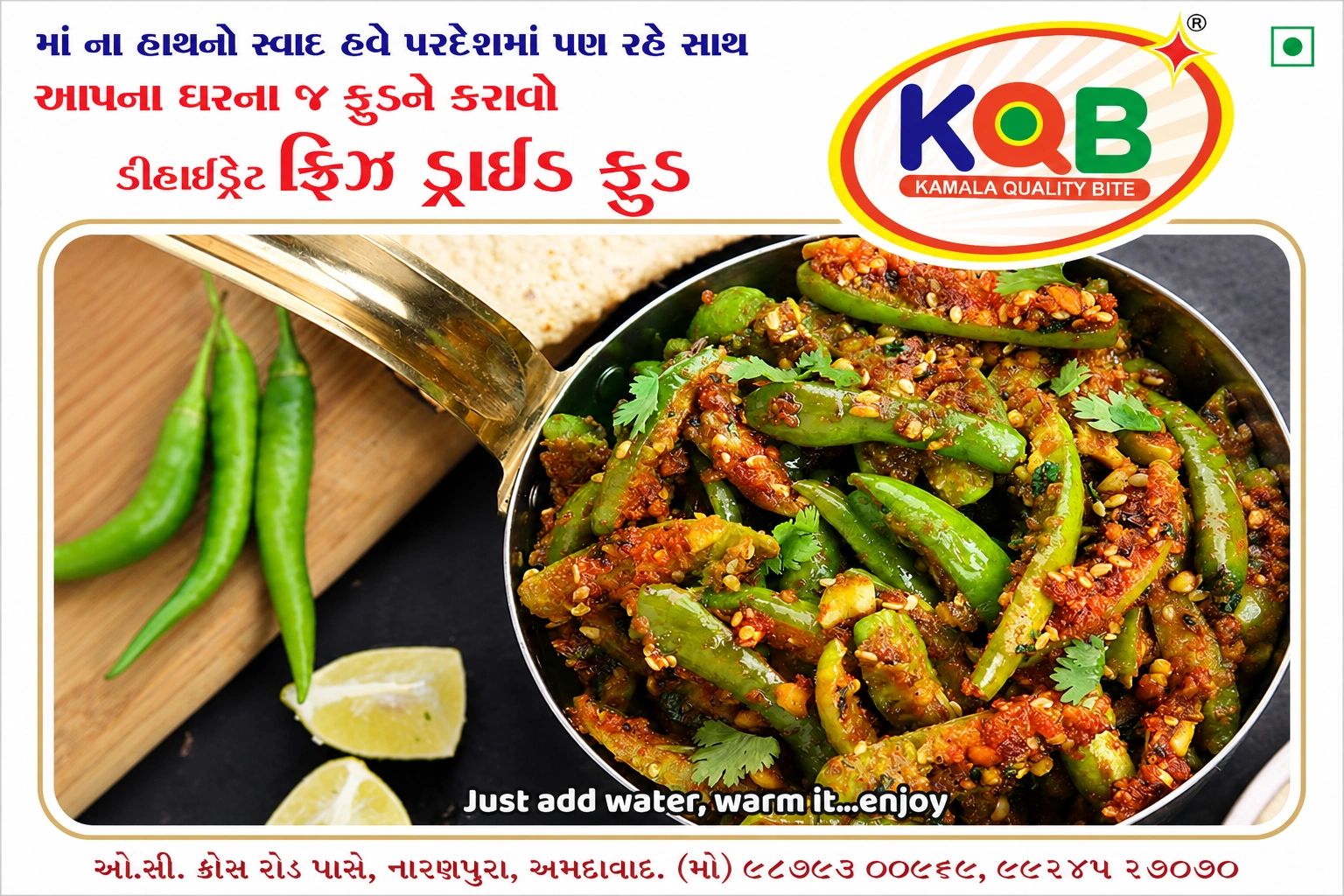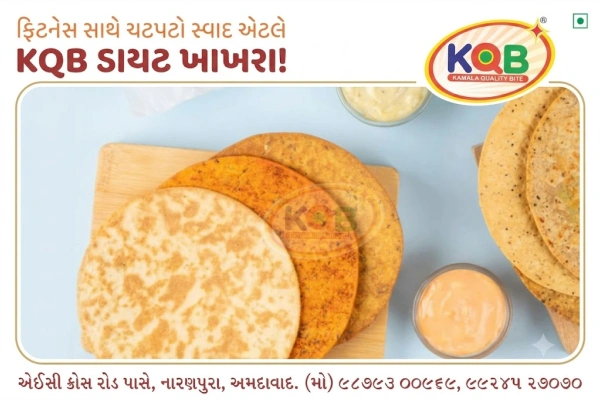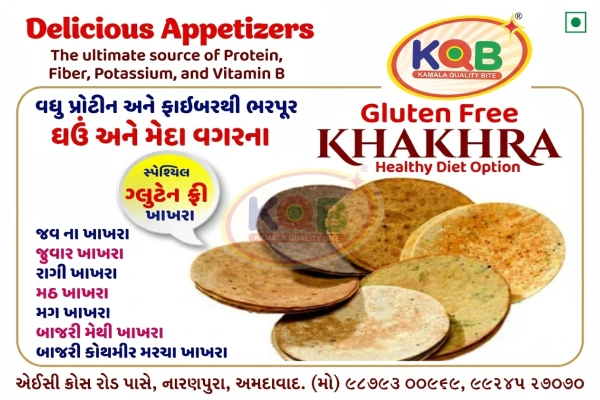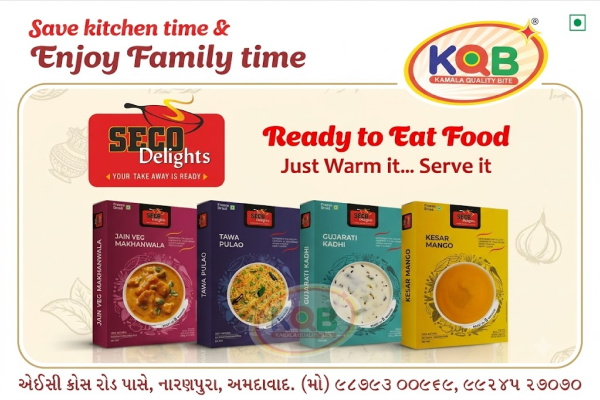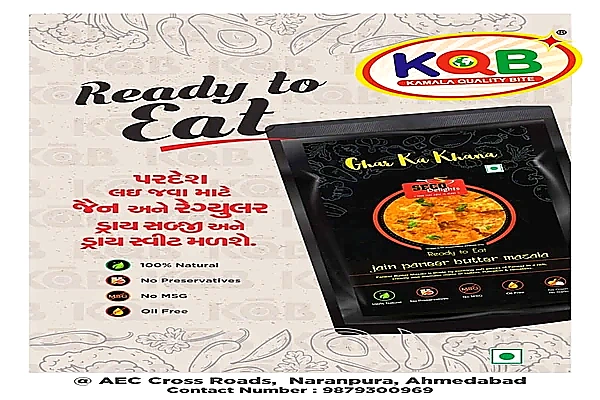
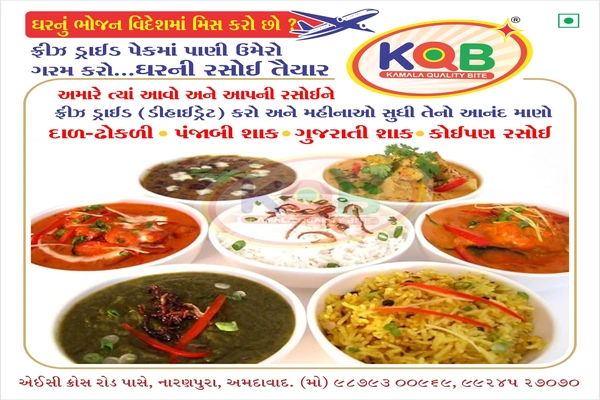
If you’ve ever tried to explain “dehydrated food packaging” to your dadi, the response is usually a confused look — she’s been sun-drying papad and vadi for decades. What KQB does at its Naranpura facility is the same core idea, engineered and hygienically controlled: your own home-cooked dal, sabzi, or palak paneer is professionally processed to remove moisture, packed to be shelf-stable, and returned to you ready to rehydrate in minutes, anywhere in the world.

This is genuinely useful for Ahmedabad families — not just for NRIs. Think of a mother preparing a full month’s worth of dal-sabzi before her daughter’s hostel semester starts, or a household prepping backup meals before a long trip, or someone managing a medically restricted diet who wants controlled, preservative-free portions on hand.

What Actually Happens to Your Food During Dehydration

Traditional dehydration removes moisture from cooked food using controlled heat, which is the primary cause of spoilage and bacterial growth. Without added moisture, the food becomes shelf-stable at room temperature for an extended period — KQB’s own service data shows a shelf life of 4–12 months, with no added preservatives, since the extended shelf life comes purely from moisture removal, not chemical additives.

The Local, Ahmedabad-Specific Process

1. You bring your prepared food to the KQB facility at B-16/17, Swaminarayan Avenue, Naranpura, Ahmedabad — submitted in clean, disposable containers or food-grade packaging for hygiene during processing.
2. Minimum quantity per item is 1 kg. Note that different dishes can’t be combined to hit this — 500 g of dal and 500 g of sabzi won’t be accepted as a combined 1 kg order; each food item needs to individually meet the minimum.
3. Processing takes 7–14 days, depending on the food type and current order volume.
4. You collect your dehydrated packets, now a fraction of their original weight and volume, ready for pantry storage, travel, or shipping.

Why “Order Dehydrated Palak Paneer” Specifically Makes Sense

Palak paneer is one of the most commonly requested dishes for dehydration, and there’s a practical reason: it’s a dish many people crave when travelling or living abroad, but it doesn’t survive travel well in its cooked form — paneer spoils quickly, and the gravy is heavy to carry. Once dehydrated, it becomes lightweight, shelf-stable, and rehydrates in minutes with boiling water, restoring a texture and flavour close to the freshly cooked version.

Rehydrating Your Packed Food

The process is deliberately simple, regardless of what was dehydrated:

1. Add the contents to a bowl and pour boiling water over it.
2. Stir thoroughly, cover, and let it sit for 3–5 minutes (or microwave for 2–3 minutes).
3. Your dish is ready to eat.

Who This Service Genuinely Helps

● Students leaving Ahmedabad for other cities or abroad, who want home-cooked food rather than relying entirely on hostel or PG meals.
● NRIs and their Ahmedabad-based families, who want to send genuinely homemade food rather than store-bought alternatives — see our dedicated guide on shipping dehydrated food internationally for customs and courier specifics.
● People with specific dietary needs — including diabetes or food allergies — who want tightly controlled, preservative-free home meals on hand rather than relying on outside food when travelling.
● Busy households that want a backup of home-cooked meals for days when cooking isn’t possible, or for unexpected guests.

How This Differs From Freeze-Drying

Dehydration and freeze-drying both remove moisture, but through different mechanisms — traditional dehydration uses heat, which can affect taste, texture, and some nutritional value, while freeze-drying removes moisture from frozen food under vacuum conditions (sublimation), preserving structure and flavour more closely to the original. If nutrient and flavour retention is your top priority — say, for a dish you want to taste as close to home-cooked as possible after months of storage — it’s worth reading our separate guide on freeze-dried food packaging in Ahmedabad to understand which process fits your dish and your budget.

Vacuum Packing Adds a Second Layer of Protection

Beyond the dehydration process itself, KQB’s vacuum packaging service is what actually locks in that shelf life for the finished product — vacuum sealing removes air, which prevents moisture re-absorption, protects against contamination, and keeps the food’s original taste and aroma intact for the labelled shelf-life window, whether that’s for pantry storage or international shipping.


Frequently Asked Questions

1. How long does dehydrated homemade food actually last?

When properly processed and packed without preservatives, dehydrated food typically has a shelf life of 4–12 months, depending on the specific food item and how it’s stored (a cool, dry place extends this further).

2. What is the minimum quantity required for dehydrated food packaging?

The minimum is 1 kg per unique food item. Different dishes cannot be combined to reach this minimum — each item needs to individually meet the 1 kg requirement.

3. How long does the dehydration process take?

Processing typically takes 7–14 days, depending on the food type submitted and the current order volume at the facility.

4. Can I get my own home-cooked palak paneer or dal dehydrated, or only pre-made products?

Yes — this is precisely the service’s core offering. You bring your own home-cooked food, and it’s professionally dehydrated and packed for you, rather than being replaced with a factory-made alternative.

5. Does dehydrating food change its taste?

Some flavour and textural change is inherent to heat-based dehydration, though it’s designed to be minimal. If preserving original taste and nutrients as closely as possible is your priority, freeze-drying is generally the better-suited process — worth discussing with the KQB team based on your specific dish.

6. Are preservatives added to extend shelf life?

No. The extended shelf life comes entirely from moisture removal during the dehydration process itself, not from any added preservatives or chemicals.


Bring your home-cooked food to KQB Food at Naranpura, Ahmedabad, or explore our Dehydrated Food range and Ready to Eat products online. You can also find us on Google Maps.
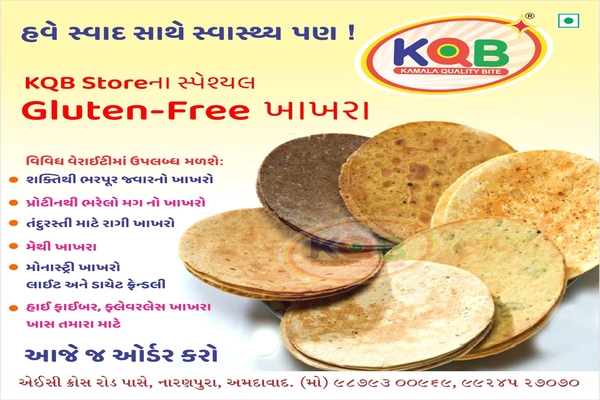
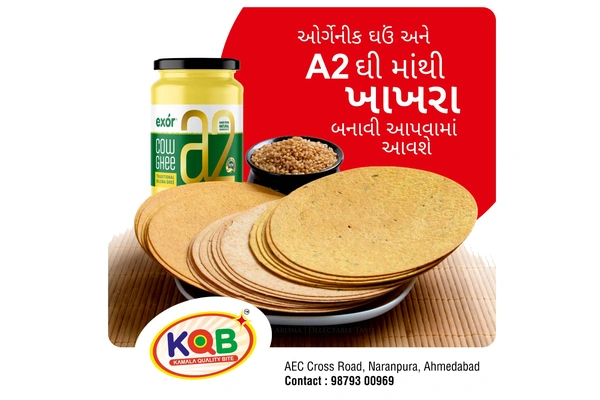
If you grew up in Ahmedabad, khakhra was probably the first snack you learned to identify by sound before you even saw it — that unmistakable crackle when someone breaks a piece over chai. For Ahmedabadis who don’t have the time (or the rolling-pin skills) to make it fresh at home every week, the question isn’t whether to eat khakhra, it’s where to reliably Buy Khakhra Online without compromising on the taste your grandmother would approve of.

At QB Food, based out of Naranpura, we’ve been making khakhra, bhakhri and namkeen the traditional way since 2005. This guide walks through what actually separates one khakhra from another — flour, fat, and technique — so your next Khakhra Online Order is based on more than just a product photo.

What Actually Makes Khakhra “Good”?

Khakhra is a thin, roasted, unleavened disc made from wheat, bajra, jowar, or millet dough that’s pressed and dry-roasted (never deep-fried) until every bit of moisture is gone. That’s precisely what gives it a shelf-stable crunch and makes it one of the lighter tea-time snacks in the Gujarati kitchen. Three variables decide the quality of the final khakhra:

1. Flour ratio — too much wheat and it turns soft in humid weather; too little binding and it cracks unevenly.
2. Roasting time — under-roasted khakhra goes chewy within days; over-roasted khakhra turns bitter.
3. Fat used — ghee-based khakhra has a richer bite and a longer aroma life than oil-based versions.

Explore KQB’s Buy Khakhra Online Range

Our full range sits under Buy Khakhra Online, organised into five focused categories so you’re not scrolling through 30-plus SKUs to find what you actually want.

1. Diet Khakhra Online

For anyone counting calories without giving up on taste, our Diet Khakhra Online range uses a leaner fat ratio and a thinner roll. The Jeera diet khakhra-handmade (₹120 for 500 g) is our most-reordered diet variant in this category — subtle cumin, no overpowering masala, ideal as a plain snack with curd or pickle.

2. Gluten Free Khakhra Online

Millet-based khakhra has genuinely grown from a “special diet” item into an everyday favourite in Ahmedabad households managing gluten sensitivity or simply eating more millets. Our Gluten-Free Khakhra line includes:

● Gluten Free Khakhra – Ragi (₹260 / 500 g) — the Ragi Khakhra Online option most requested by people managing blood sugar.
● Gluten Free Khakhra – Jav and Gluten Free Khakhra – Juwar (₹260 / 500 g each)
● Gluten Free Khakhra – Bajri Methi, our take on Bajri Na Khakhra with fresh fenugreek (₹260 / 500 g)
● Gluten Free Khakhra – Juvar Methi Lasan, a garlicky Lasan Methi Khakhra variant (₹240 / 500 g)
● Gluten Free Khakhra – Kothmir Marcha Bajari and Gluten Free Khakhra – Math

None of these use any wheat flour, so if you’re strictly avoiding gluten rather than just reducing it, this is the category to shop from — not the “regular” or “wheat” range.

3. Pure Ghee Khakhra

There’s a reason Pure Ghee Khakhra still outsells oil-roasted versions in Ahmedabad — the aroma holds for weeks, not days. Our Pure Ghee Khakhra collection is roasted in-house and pairs well with our Wheat Khakhra Online base for anyone who wants the classic taste without the millet texture.

4. Regular & Wheat Khakhra

Our Regular khakhra range covers the everyday favourites:

● Jeera Mari Wheat Khakhra (₹150 / 500 g) — peppery and sharp
● Jeera Sada Wheat Khakhra — a plainer Jeera Sada Khakhra Online option for those who prefer minimal masala
● Jiralu Khakhra (₹150 / 400 g) — a Jiralu Khakhra Online favourite among older customers who grew up on this exact flavour
● Bajra methi khakhra-handmade (₹170 / 400 g) — our answer to anyone searching Bajra Khakhra Online

5. Variety Khakhra

If you can’t decide, our Variety khakhra box is built exactly for that. It’s also where our more experimental flavours live, including:

● Cheese khakhra (₹150 / 400 g)
● Cholafali khakhra, a handmade Cholafali Khakhra Online crossover between khakhra and the crisp cholafali texture (₹150 / 400 g)
● All In One Dose Khakhra (₹250), a dosa-style crossover
● Flavours like Panipuri and Pizza (searched as Panipuri Khakhra Online and Pizza Khakhra Online) rotate through this range as part of our newer flavour experiments — check the Variety khakhra page for current stock, since flavour-based khakhra sells out faster than the classic range.

Khakhra vs Bhakhri — A Quick Clarification

We get asked this constantly at our Naranpura counter: khakhra is thin, dry-roasted, and crisp throughout, while bhakhri is thicker, softer at the centre, and closer to a flatbread. If you want something to eat on its own with tea, khakhra is the better pick. If you want something to eat with sabzi or dal, bhakhri holds up better.

Why Ahmedabad Customers Buy Homemade Khakhra Online From KQB

● Handmade batches, not factory rolling — texture varies naturally, the way homemade khakhra should.
● 510+ products across khakhra, namkeen, and farsan mean you can bundle your order and save on a single delivery.
● No compromise on roasting time — every batch is dry-roasted long enough for a full 6–12 month shelf life when vacuum-packed, so a Khakhra Online Order placed today still tastes right months later.
● Locally based in Naranpura, Ahmedabad, which means fresher stock and faster local delivery compared to importing khakhra from outside Gujarat.

If you’re searching for the Best Khakhra Online in Ahmedabad, the honest answer is: try more than one flavour family before deciding. A diet-conscious buyer and a pure-ghee traditionalist are looking for completely different things, and KQB’s range is built to serve both from the same kitchen.

Visit Us or Order Online

You can browse the complete range and place your Khakhra Online Order directly at kqbfood.com/product-category/buy-khakhra-online, or drop by our Naranpura store — find us on Google here: KQB Food on Google Maps.


FAQs

1. Is gluten-free khakhra the same as diet khakhra?

No. Gluten-free khakhra (ragi, jowar, bajra-based) is for people avoiding wheat entirely. Diet khakhra is generally wheat-based but made with a leaner fat ratio for calorie-conscious eating. Check the specific Gluten-Free Khakhra or Diet Khakhra Online category depending on your actual requirement.

2. How long does pure ghee khakhra stay fresh once opened?

Once vacuum-packed and unopened, khakhra can stay fresh up to a year. After opening, we recommend finishing it within 2–3 weeks and storing it in an airtight container, away from humidity — a real concern during Ahmedabad’s monsoon months.

3. Do you deliver khakhra across Ahmedabad the same week?

Yes, local Ahmedabad orders are dispatched from our Naranpura facility. For exact delivery timelines on your pin code, check with us via the Contact Us page.

Most people use “dehydrated” and “freeze-dried” interchangeably. They shouldn’t — the two processes work on genuinely different physical principles, and the difference directly affects how close your rehydrated dal or sabzi tastes to the version your mother actually cooked. If you’re in Ahmedabad and comparing options for preserving home-cooked food — whether for a child studying abroad, a long trip, or simply stocking your own pantry — understanding this distinction changes which service you should actually choose.

What Freeze-Drying Actually Does (Sublimation, Not Heat)

Regular dehydration uses heat to drive off moisture — effective, but heat inevitably alters some of the food’s flavour compounds, texture, and nutrient content in the process. Freeze-drying works differently: the food is first frozen at very low temperatures, then placed inside a specialised freeze-drying chamber where moisture is removed through sublimation — the direct transition of ice into vapour, without passing through a liquid state — under vacuum conditions.

Because this happens at low temperatures rather than through heat exposure, freeze-drying preserves the food’s original structure, taste, aroma, and nutritional value far more effectively than conventional heat-based drying. This is precisely why freeze-dried food generally delivers superior quality and a longer shelf life compared to traditionally dehydrated food.

What This Means in Practice

● Nutrient retention: KQB’s ready-to-eat freeze-dried process is designed to preserve roughly 95% of the original nutrients — a meaningfully higher retention rate than heat-based drying typically achieves, since minimal heat exposure means less degradation of heat-sensitive vitamins.
● Shelf life: When stored properly in a cool, dry place, freeze-dried food can typically last 12 months or longer while maintaining quality — noticeably longer than the 4–12 month range typical of conventional dehydration.
● Weight: Freeze-dried packets weigh roughly five times less than the original cooked meal, since virtually all the water content is removed while the food’s cellular structure stays largely intact — this is why it’s the preferred choice for anyone shipping food internationally or carrying it while travelling.
● Taste after rehydration: Because sublimation avoids the thermal degradation that heat-based drying causes, many customers report that properly rehydrated freeze-dried meals taste very close to the freshly prepared original — a claim that’s much harder to make about heavily heat-dried food.

The Local Process at KQB, Naranpura

1. Submit your home-cooked food in clean, disposable containers, clearly labelled, at the KQB facility in Naranpura, Ahmedabad.
2. Minimum 1 kg per unique food item — dishes cannot be combined to meet this threshold; each dish needs to individually hit 1 kg.
3. Freezing and sublimation processing — the food is frozen, then moisture is removed under vacuum in the freeze-drying chamber.
4. Moisture-resistant packaging — once processed, food is sealed to protect the extended shelf life from humidity re-absorption, which is the primary risk factor that would otherwise shorten shelf life.
5. Collection within 7–14 days, depending on the dish and current processing volume.

What Kinds of Food Actually Work Well

A genuinely wide range of home-cooked and packaged foods can be freeze-dried, including ras, dal, sabzi, full cooked meals, fruits, sweets, snacks, and gravies. If you’re unsure whether a specific dish of yours is suitable, it’s worth checking directly with the KQB team before committing your full quantity — some high-fat or very liquid preparations behave differently under sublimation than drier dishes do.

Rehydration: Just Add Water

1. Add the appropriate amount of water to the freeze-dried food.
2. Let it absorb moisture for a few minutes — exact timing varies slightly by dish.
3. Heat and consume as you would a freshly prepared meal.

Why This Matters More for Ahmedabad Families Than People Assume

This isn’t only for people already living abroad. Ahmedabad has a large base of families with children studying overseas, relatives travelling for extended work assignments, and Jain and vegetarian travellers who struggle to find trustworthy food options on the road. For all of these, freeze-dried home food solves a specific problem regular travel snacks can’t: it’s your actual home-cooked dish, not a commercial substitute, preserved in a form light enough to pack in a suitcase and durable enough to survive weeks of travel without refrigeration.

How This Differs From Dehydration — Choosing the Right Service

If your priority is maximum nutrient and flavour retention and you’re willing to pay more for it, freeze-drying is the stronger choice. If cost is the primary factor and moderate quality loss is acceptable, conventional dehydrated food packaging may suit your needs better — our companion guide on dehydrated food packaging service in Ahmedabad breaks down that trade-off in more detail.


Frequently Asked Questions

1. What is the actual difference between freeze-drying and dehydration?

Dehydration uses heat to remove moisture, which can affect taste, texture, and nutrient content. Freeze-drying removes moisture from already-frozen food through sublimation under vacuum, at much lower temperatures — which preserves the food’s original flavour, structure, and nutrients more effectively.

2. How much of the original nutrition is retained after freeze-drying?

KQB’s process is designed to preserve approximately 95% of the original nutrients, since the low-temperature sublimation process causes far less degradation of heat-sensitive vitamins and compounds than conventional heat-based drying.

3. How long does freeze-dried food last?

When stored in a cool, dry place, freeze-dried food typically lasts 12 months or longer while maintaining its quality — generally longer than conventionally dehydrated food.

4. Is there a minimum quantity for freeze-drying service?

Yes, a minimum of 1 kg per unique food item is required, and different food items cannot be combined to meet this minimum.

5. Does freeze-dried food taste different after rehydration?

One of the main advantages of freeze-drying is that it preserves the original taste and aroma closely — many customers find rehydrated freeze-dried meals taste very close to the freshly prepared version, more so than conventionally dehydrated food.

6. Can I freeze-dry food to send abroad to family?

Yes, freeze-dried food is well suited for international shipping since it’s significantly lighter and has a longer shelf life than fresh or conventionally dried food — though it’s worth checking the destination country’s food import regulations first. See our guide on freeze-dried food for international travel and students abroad for details.


Bring your home-cooked meals to KQB Food’s Naranpura facility in Ahmedabad, or explore our Dehydrated & Freeze-Dried Food range online. Find us on Google Maps.

Two Different Products Hiding Under One Search Term

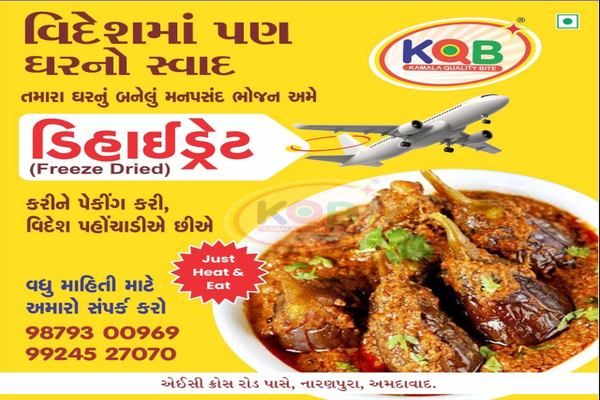
Buyers searching for a “dehydrated food packaging service” are usually looking for one of two genuinely different things: a ready-made catalogue of pre-cooked, dehydrated Indian meals they can simply order and rehydrate, or a custom service that will take their own home-cooked food (or a family recipe) and dehydrate and vacuum-pack it for travel, relocation, or long-term storage. KQB Food offers both, but the custom packaging service — where you supply the dish and we handle the preservation and sealing — is the part most international buyers do not realise exists until they specifically look for it.

How the Custom Dehydrated Food Packaging Service Works

According to KQB Food’s own service documentation, the process is built around preserving home-cooked meals for people who are travelling, relocating abroad, or simply want to plan ahead without losing the comfort of familiar, familiar-tasting food. Practically, this means a customer’s dish is processed through dehydration or freeze-drying, then sealed to lock in freshness, flavour, and shelf stability without relying on synthetic preservatives.

This is particularly relevant for Jain and vegetarian travellers heading to destinations with limited compatible food options, for students relocating abroad who want a stock of home-style meals before they settle into a new kitchen, and for anyone managing diabetes, food allergies, or another condition that requires tightly controlled, known ingredients rather than restaurant food of unknown composition.

What You Need to Know Before Submitting Food for Packaging

• A minimum quantity per unique food item is generally required for the service to be viable, so this is best suited to preparing a genuine travel or relocation stock rather than a single small portion.

• Different dishes cannot typically be combined into a single processing batch; each unique item is processed and packed separately.

• Food should be submitted in clean, food-safe, disposable containers, clearly labelled with the dish name, to avoid mix-ups during processing.

• Turnaround time from submission to a finished, sealed, ready-to-ship product typically runs in the range of one to two weeks, so this is not an instant same-day service.

• International buyers should check their destination country’s customs and food-import regulations before shipping processed food across borders, since rules vary significantly by country.

Vacuum Packaging: The Layer Most People Overlook

Dehydration removes moisture; vacuum packaging is what protects that dried state from being undone by humidity, contamination, or physical damage during a long international shipment. KQB Food’s vacuum packaging service seals product tightly against the food, minimising trapped air and material waste while creating a barrier against moisture, dust, and contamination. For food specifically, this also plays a direct role in preventing leakage or spoilage risk during transit, which matters considerably more on a two-week international courier route than on a same-day domestic delivery.

Homemade Food Packing Services vs Off-the-Shelf Ready-to-Eat

It is worth being explicit about the trade-off between the two paths. Off-the-shelf ready-to-eat packets from our Dehydrated Food category are faster to obtain, already quality-tested, and cover the most commonly requested dishes such as dal makhani, khichdi kadhi, and pav bhaji. The custom homemade food packaging service takes longer and requires a minimum quantity, but preserves a specific family recipe or regional dish that simply is not available in a packaged catalogue. Many international customers use both: packaged meals for everyday convenience, and the custom service for a small batch of a dish with genuine sentimental or regional significance before a long trip.

A Practical Checklist for International Buyers

• Decide first whether you need packaged, ready-made meals or custom processing of your own dish — they are different services with different lead times.

• If using the custom service, prepare food in labelled, food-safe containers ahead of drop-off or courier submission.

• Plan for a one-to-two-week processing turnaround rather than expecting same-week dispatch for custom orders.

• Confirm import rules for packaged/processed food in your destination country before finalising a large shipment.

• Combine vacuum-packed food with vacuum-packed clothing or soft goods in the same relocation shipment where useful.

Frequently Asked Questions

1. Can I send my own home-cooked dish to be dehydrated and packaged?

Yes. KQB Food offers a custom dehydrated food packaging service where a customer’s own dish, submitted in a clean, labelled container, is dehydrated or freeze-dried and vacuum-sealed for travel or storage.

2. How long does the custom dehydrated food packaging service take?

Turnaround from submission to a finished, sealed product typically runs approximately one to two weeks, depending on the dish.

3. Is there a minimum quantity for custom dehydrated food packaging?

Yes, a minimum quantity per unique food item is generally required, and different dishes are processed and packed separately rather than combined into one batch.

4. Does vacuum packaging work for anything other than food?

Yes. The same vacuum-sealing service is also used for compressing and protecting travel essentials such as clothing and soft goods, in addition to food.


Get Your Home-Cooked Meals Dehydrated and Packed for Travel

Learn more about our Dehydrated Food Packaging Service and Vacuum Packaging at kqbfood.com, or browse ready-made options in the Dehydrated Food category. Visit our Ahmedabad facility: KQB Food on Google Maps.

Khakhra Was Always Meant to Be a Canvas

One of the most misunderstood things about khakhra outside India is that it is a fixed, single-flavour snack. In reality, khakhra has functioned as a base canvas in Gujarati kitchens for generations — thin, roasted, and neutral enough to be topped, seasoned, or reinvented depending on what is available and what the family is in the mood for. The current wave of fusion khakhra flavours — panipuri, cheese, pizza, Mexican — is less a departure from tradition and more a continuation of a habit that has always existed, now formalised into packaged, shippable products for a global audience.

The Traditional-to-Fusion Spectrum

It helps to think of khakhra flavours on a spectrum rather than as separate categories. On one end sits sada and jeera khakhra — the plain, everyday base. Moving along the spectrum brings in methi (fenugreek) khakhra, where dried or fresh fenugreek leaves are worked into the dough for a slightly bitter, aromatic edge that pairs well with tea. Lasan-methi khakhra pushes further, adding garlic (lasan) alongside fenugreek for a punchier, more savoury result popular with buyers who want traditional flavour with more intensity. From there, the spectrum moves into fully fusion territory: panipuri khakhra, which mimics the tangy, spiced flavour of the popular street snack; cheese and pizza khakhra, developed for a younger, more globally influenced palate; and Mexican khakhra, which borrows chilli and smoky seasoning profiles from Tex-Mex snacking.

Why Fusion Khakhra Resonates Specifically With the Diaspora

International buyers, particularly second-generation Indian families abroad, occupy a specific cultural position: familiar with the format and texture of khakhra from childhood or family visits, but often more accustomed to bolder, more Westernised flavour profiles in daily snacking. Fusion khakhra flavours bridge that gap directly — they retain the roasted, low-oil texture that reads as “Indian snack” while delivering a flavour profile (cheese, pizza seasoning, chilli-lime notes) that requires no cultural translation for someone who grew up eating Western snack foods alongside Indian ones.

This also explains why fusion khakhra performs well as an introductory product for non-Indian friends, partners, or colleagues. A plain sada khakhra can be an acquired taste for someone with no prior exposure to Gujarati food; a cheese or pizza khakhra offers a more immediately recognisable flavour while still introducing the format and texture of a traditional Indian snack.

Building a Variety Box for International Shipping

Because khakhra ships well due to its roasted, low-moisture nature, a mixed variety order is one of the most practical ways for international buyers to sample the full range without committing to a single flavour in bulk. Our Variety Khakhra collection is built around exactly this use case, combining traditional options like methi and lasan-methi with fusion flavours such as panipuri, cheese, pizza, and Mexican khakhra in a single browsing category.

• Start with one traditional flavour (jeera or methi) and one fusion flavour (cheese or pizza) to compare texture and intensity side by side.
• Panipuri khakhra works particularly well as a stand-alone snack rather than a base for toppings, since it is already tangy and spiced.
• Lasan-methi khakhra pairs well with plain yoghurt or curd for buyers who want a milder, home-style eating experience.
• For gifting internationally, a mixed variety box tends to perform better than a single-flavour bulk order, since recipients can choose their preference.

Beyond Khakhra: Handmade Cholafali as a Complementary Fusion-Friendly Snack

Buyers exploring flavour variety in khakhra often gravitate toward similarly textured Gujarati snacks. Our Handmade Cholafali — a thin, crisp, deep-fried gram-flour snack traditionally associated with Diwali — makes a strong pairing addition to a khakhra-based international order, particularly for customers building a broader festive or gifting snack box rather than a single-item purchase.

Frequently Asked Questions

1. Is fusion khakhra (cheese, pizza, Mexican) authentic Gujarati food?

The base preparation method — thin dough, pressed and roasted — is authentically Gujarati. The seasoning profiles for cheese, pizza, and Mexican variants are modern adaptations developed to suit contemporary and international palates.

2. What is the difference between methi and lasan-methi khakhra?

Methi khakhra contains fenugreek for a mildly bitter, aromatic flavour. Lasan-methi khakhra adds garlic to the same base for a stronger, more savoury result.

3. Which khakhra flavour is best for introducing a non-Indian friend to the snack?

Cheese or pizza khakhra tend to be the easiest entry point, since the flavour profile is already familiar, while the texture introduces them to a traditional Indian preparation method.

4. Can a variety pack of khakhra be shipped internationally in one order?

Yes. Because khakhra is roasted rather than fried in oil and has low residual moisture, mixed-flavour variety packs generally ship well over long distances, subject to destination-country import rules.


Explore Fusion and Traditional Khakhra Flavours

Browse the full Variety Khakhra range and Regular Khakhra at kqbfood.com, plus our Handmade Cholafali. Visit us on Google: KQB Food, Naranpura, Ahmedabad.

Why “Gluten-Free” and “Diet” Are Not the Same Claim

For international shoppers researching Indian snacks, the terms gluten-free and diet-friendly are frequently used interchangeably, but they describe different formulations and serve different needs. Gluten-free khakhra is built around the exclusion of wheat, barley, and rye-derived flours, replacing them with grains such as ragi (finger millet), bajra (pearl millet), or jowar (sorghum) — a requirement for anyone with coeliac disease or a diagnosed gluten intolerance. Diet khakhra, by contrast, is generally about calorie and oil density: it can still contain wheat, but is roasted with less oil and portioned for lighter snacking. Understanding this distinction before ordering saves both money and disappointment, especially when shipping internationally means a longer wait for a replacement order.

The Grain Science Behind Millet-Based Khakhra

Ragi and bajra are both classified as “nutri-cereals” in Indian agricultural policy because of their micronutrient density relative to refined wheat. Ragi is notable for its calcium content and a comparatively low glycaemic response, which is why it appears frequently in diabetic-friendly meal planning across South Asia. Bajra, meanwhile, is higher in iron and fibre and has a coarser, nuttier bite that changes the texture of khakhra noticeably compared to a wheat base — it roasts to a denser crunch rather than a light, flaky snap.

When these grains are used for khakhra, the dough hydration and rolling technique both need adjustment, because millet flours lack the gluten network that gives wheat dough its elasticity. This is precisely why gluten-free khakhra production is a distinct process rather than a simple ingredient swap, and why quality varies significantly between brands. Our Gluten-Free Khakhra range and broader Variety Khakhra catalogue include bajra and bajra-methi formulations built specifically to hold together and roast evenly despite the absence of gluten.

Roasted, Not Fried: The Underlying Reason Khakhra Reads as a “Diet” Snack

Khakhra’s reputation as a lighter snack option comes down to preparation method rather than ingredients alone. Unlike many deep-fried Indian namkeen, khakhra is roasted directly on a tawa (griddle) in thin, pressed layers, which significantly reduces the oil absorbed during cooking compared to frying. This roasting method is also what gives khakhra its long, ambient shelf life without heavy preservative use, which matters for anyone ordering it for international shipping where transit can take days to weeks.

What International Buyers Should Check Before Ordering

• Confirm whether the product is labeled strictly gluten-free (millet-based) or simply “lighter” wheat khakhra, since only the former is safe for coeliac diets.
• Check ingredient lists for cross-contact disclosures if you have a severe gluten allergy rather than a general sensitivity.
• Factor in shipping duration to your country when choosing between smaller trial packs and bulk orders.
• Pair millet-based khakhra with our Diet Namkeen range if you want a fully lower-oil snack box rather than mixing in regular fried namkeen.

Why Sourcing From an Established Ahmedabad Maker Matters Internationally

Gluten-free and diet khakhra are more sensitive to manufacturing inconsistency than regular wheat khakhra, because millet doughs are harder to work with and easier to under- or over-roast. KQB Food has been producing traditional Gujarati snacks since 2005, as outlined on our About Us page, and our production base in Naranpura, Ahmedabad follows the same recipes used for decades in Gujarati households, adapted for millet flours rather than reformulated from scratch for a health-food market. For a diaspora buyer, that lineage matters: it is the difference between a snack engineered for a nutrition label and one that still tastes like the khakhra you grew up with.

Frequently Asked Questions

1. Is all khakhra automatically gluten-free?

No. Most traditional khakhra is made from wheat flour and is not gluten-free. Only khakhra explicitly made from ragi, bajra, jowar, or other non-wheat flours qualifies as gluten-free.

2. Is diet khakhra suitable for someone with coeliac disease?

Not necessarily. “Diet” typically refers to reduced oil and calorie content, not the absence of gluten. Coeliac buyers should specifically choose gluten-free (millet-based) khakhra.

3. Does gluten-free khakhra taste different from wheat khakhra?

Yes. Millet-based khakhra, particularly bajra, has a denser, nuttier texture compared to the light, flaky crunch of wheat khakhra.

4. Can gluten-free and diet khakhra be shipped internationally?

Yes, khakhra is roasted rather than fried and has a naturally long ambient shelf life, which makes it practical to ship to international addresses, subject to each country’s food import regulations.


Explore Our Gluten-Free and Diet Khakhra Range

Browse Gluten-Free Khakhra and Diet Khakhra Online at kqbfood.com, or see our full Buy Khakhra Online catalogue. Find our Ahmedabad facility on Google: KQB Food, Naranpura.

Ahmedabad has one of the largest Jain communities in the country, and anyone who follows a strict no-onion, no-garlic diet knows the everyday problem: most “instant food” on the market simply isn’t built for it. That’s exactly the gap KQB’s Eat Easy range was created to close — genuinely Jain-friendly, dehydrated, ready-to-eat meals made in our own Naranpura kitchen, not a mass-market factory.

This is a practical, local guide to what’s actually in the range, so your next order is based on what you’ll actually finish eating — not just what’s trending.

Why Jain Ready-to-Eat Food Is Different to Make

Cooking Jain food that still tastes rich without onion, garlic, or root vegetables takes a different masala base than regular cooking — most of the depth has to come from roasted spices, tomato, and slow-cooked gravies rather than the usual onion-garlic tadka. When you dehydrate that kind of gravy, getting the flavour to survive rehydration is genuinely harder than with a regular curry. That’s the whole reason our Eat Easy range exists as a dedicated line rather than a side note on our main dehydrated food catalogue.

The Jain Eat Easy Range, Product by Product

All of the below sit inside Dehydrated Food (Freezed-Dried Food) → Eat Easy, and each one rehydrates in about 5 minutes with hot water.

Dals & Gravies

● Jain Dal Makhani Ready to Eat (₹129 / 62 g) — if you specifically want to Buy Jain Dal Makhani online, this is our lighter everyday pack; we also stock a richer Jain dal makhani (₹189 / 80 g) for a thicker, more indulgent gravy.
● Jain palak paneer (₹199 / 80 g) and a smaller pack at ₹189 / 50 g — for anyone who wants to Buy Jain Palak Paneer online without the usual onion-garlic base.
● Jain paneer butter masala (₹199 / 80 g, also available at ₹189 / 80 g) — our answer for customers who want to Buy Jain Paneer Butter Masala online with the same
restaurant-style richness, minus onion and garlic.
● Jain paneer lababdar (₹279 / 100 g) — our most premium Jain gravy pack.
● Jain paneer bhurji (₹119 / 70 g)

Pav Bhaji & Street Food, Jain Style

● Jain pav bhaji (₹179 / 67 g) and a smaller pack at ₹139 / 55 g — for households that want to Buy Jain Pav Bhaji Online or keep a Buy Jain Pav Bhaji Packet ready for a quick Sunday dinner.

Breakfast — Poha & Upma

● Jain poha (₹70 / 100 g) — the most searched item in this section, for anyone wanting to Buy Jain Poha packet online for a genuinely traditional breakfast without onion.
● Jain upma (₹70 / 100 g) — same logic applies if you want to Buy Jain Upma Packet or Buy Jain Upma Online; both are ready in under 5 minutes, which matters on a rushed Ahmedabad morning before college or office.

Rice & Khichdi

● Jain khichdi kadhi (₹99 / 55 g) and Jain masala khichdi kadhi (₹119 / 55 g) — our take on Gujarati Khichdi Kadhi Online, one of the most comforting combinations in a Gujarati kitchen, now shelf-stable.
● Jeera rice (₹159 / 95 g) pairs well with any of the dal or gravy packs above for a complete Jain thali in minutes.

Sweet & Comfort Food

● Moong dal sheera (₹159 / 95 g) — if you’re searching Ready To Eat Moong Dal Sheera or want to Buy Moong Dal Sheera Online, this is our warm-weather-friendly dessert pack, made without any preservatives, just dehydrated the traditional way.

A Note on Jain Dal Tadka and Veg Makhanwala

Customers regularly ask us for Jain Dal Tadka Ready To Eat and Jain Veg Makhanwala packs — both dishes are part of the philosophy behind our Eat Easy line, and our catalogue is expanding steadily as we test more Jain gravies for shelf stability. The fastest way to check current stock on either is to browse the live Eat Easy listing, since we add new Jain SKUs there first.

Namkeen: The Other Half of an Ahmedabad Pantry

No Gujarati snack order is complete without namkeen, and our Namkeen range is where most repeat customers who Buy Namkeen Online from us actually spend the bulk of their order. It includes:

● Sev, Gathiya, and Chavana-chevda for everyday tea-time snacking
● Diet namkeen for a lighter option
● Kachori,, Chana jor, and Papdi/fafda for anyone who wants a more filling, spiced snack

If you’re specifically looking to Buy Indian Namkeen Online alongside your Jain meal packs, we’d suggest combining a namkeen and an Eat Easy pack in one order — most of our Ahmedabad customers already do this to save on a single delivery run.

Green Chutney & Sweet Tuvar Dal

Our Eat Easy catalogue also carries dehydrated green chutney, which is one of the most useful items in the range simply because fresh chutney doesn’t travel or store well — the dehydrated version solves that. For a comforting, mildly sweet dal, our Gujarati Dal Ready to Eat (₹159 / 55 g) is the closest match to what most households mean when they ask to Buy Sweet Gujarati Tuvar Dal Online — it’s made in the classic Gujarati style with a touch of jaggery. Both are available through the Eat Easy listing; do check the live product page for exact stock, since chutney batches move fast.

Ordering From Naranpura, Ahmedabad

All Eat Easy and namkeen products are made and packed at our facility at B-16/17, Swaminarayan Avenue, Beside Ambica Dalvada, Near AEC Cross Road, Naranpura, Ahmedabad — 380013. You can find directions and reviews from other Ahmedabad customers on our Google Business listing here: KQB Food on Google Maps.


Frequently Asked Questions

1. Is the entire Eat Easy range strictly Jain (no onion, no garlic)?

The Jain-labelled products (Jain Dal Makhani, Jain Palak Paneer, Jain Pav Bhaji, Jain Poha, Jain Upma, Jain Khichdi Kadhi, etc.) are made without onion and garlic. The Eat Easy range also includes some regular (non-Jain) items like Palak Paneer and Paneer Bhurji, so always check the product name before ordering if you’re strictly Jain.

2. How do I prepare a Jain ready-to-eat pack?

Add the contents to a bowl, pour boiling water over it, stir, cover, and let it sit for 3–5 minutes (or microwave for 2–3 minutes). It’s ready to eat straight after.

3. Can I order namkeen and Jain meal packs together in one delivery?

Yes — both fall under the same KQB catalogue, so you can combine Namkeen and Eat Easy products in a single Ahmedabad order.

The Real Problem Jain Travellers Face Abroad

Jain dietary practice excludes not only meat, egg, and fish, but also onion, garlic, and most root vegetables — a restriction that most restaurant kitchens outside India, and even many within it, are simply not equipped to honour reliably. For a Jain student moving abroad for university, a Jain professional relocating for work, or a Jain family travelling internationally, this is not a minor inconvenience: it often means every meal requires either self-cooking from scratch or accepting food that does not actually meet the dietary requirement. Jain ready-to-eat meals exist specifically to close this gap, and understanding how they are made is useful before ordering internationally.

How Jain Ready-to-Eat Meals Are Actually Produced

Jain ready-to-eat meals in our range are prepared as full dishes first — cooked the traditional way, without onion, garlic, or excluded root vegetables — and then dehydrated or freeze-dried to remove moisture while retaining the dish’s structure and nutrient content. According to KQB Food’s own production notes, this preservation process is designed to retain the large majority of a meal’s original nutrients, rather than relying on heavy reprocessing or synthetic flavouring to compensate for what is lost. The result is a sealed packet that rehydrates back into a recognisable version of the original dish, typically by adding hot or boiling water and allowing it to sit for a few minutes.

This is meaningfully different from instant meal categories built around dehydrated vegetables and flavour powders. A Jain ready-to-eat dal makhani or palak paneer packet is the actual cooked dish, moisture-removed for shelf stability, not a reconstructed approximation.

The Core Jain Ready-to-Eat Range

KQB Food’s Eat Easy and SECO Delights lines cover the dishes Jain households actually rely on for daily meals, not just occasional treats:

• Jain Dal Makhani — the rich, buttery black lentil and kidney bean preparation, made without onion or garlic,
ready in minutes.
• Jain Palak Paneer — spinach gravy with paneer, a reliable protein-and-greens option for travellers managing
limited cooking access.
• Jain Paneer Butter Masala — the tomato-based paneer classic, prepared Jain-style for a familiar
restaurant-style flavour without the restaurant risk.
• Jain Pav Bhaji — the popular Mumbai street dish, mashed-vegetable base included, formulated without
onion and garlic.
• Jain Poha — a light, breakfast-friendly flattened-rice dish for mornings when cooking is not practical.
• Jain Khichdi Kadhi and Jain Masala Khichdi Kadhi — the classic Gujarati rice-lentil and yoghurt-curry
combination, a genuine comfort-food staple for homesick travellers.

The broader Eat Easy collection, viewable at kqbfood.com/collections/eat-easy, also includes Jain Dal Tadka, Jain Paneer Bhurji, Jain Upma, and Jain Veg Makhanwala for buyers who want a fuller weekly rotation rather than a handful of single dishes.

Why This Matters More for International Orders Than Domestic Ones

Within India, a Jain traveller can usually find at least one restaurant or home-cook willing to accommodate the diet, even if imperfectly. Outside India — particularly in countries with limited Indian restaurant density, or on multi-week travel itineraries through Europe, Southeast Asia, or remote work destinations — that fallback often does not exist. Jain ready-to-eat meals become less of a convenience and more of a dietary safety net, which is why shelf stability, correct labelling, and rehydration reliability matter far more for this buyer than for someone ordering the same meals for occasional use at home.

Practical Guidance for Ordering Internationally

• Order a small mixed selection first if you have not tried dehydrated Jain meals before, to confirm the rehydrated texture and spice level suit your preference.
• Favour dal- and gravy-based dishes (dal makhani, palak paneer, paneer butter masala) for the most reliable rehydration results, since these formats tolerate the hot-water process best.
• Check your destination country’s food import regulations before placing a large international order, since rules on packaged food imports vary by country.
• Store packets in a cool, dry place after arrival; the dehydration process is designed for shelf stability, not refrigeration dependency.

For a broader view of how the entire dehydrated and freeze-dried category works, including turnaround times and packaging standards, see our detailed Ready to Eat page and the full Dehydrated Food (Freezed-Dried Food) category.

Frequently Asked Questions

1. Are these Jain meals genuinely free of onion and garlic, or just “mild”?

They are prepared according to Jain dietary requirements, which specifically exclude onion, garlic, and most root vegetables, not simply reduced-spice versions of the standard recipe.

2. How do I prepare a Jain ready-to-eat packet?

Most dishes are prepared by adding hot or boiling water to the dehydrated contents and allowing them to rehydrate for a few minutes before serving; exact instructions are listed on each product page.

3. Do these meals need refrigeration during international shipping?

No. Dehydration and freeze-drying remove the moisture that would otherwise require refrigeration, which is what makes these meals practical to ship internationally.

4. Is nutrition significantly lost during the dehydration process?

The dehydration and freeze-drying methods used are designed to retain the large majority of the original dish’ nutrients, unlike heavily processed instant-meal alternatives.


Order Jain Ready-to-Eat Meals Online

Browse the full Eat Easy collection and Dehydrated Food category at kqbfood.com. See our Ahmedabad facility on Google: KQB Food, Naranpura.

Two Roasting Philosophies, One Snack

To an outside observer, khakhra can look like a single product with different flavour labels. To anyone who grew up eating it, jeera-sada wheat khakhra and pure ghee khakhra are almost different snacks — not because the base dough differs dramatically, but because the roasting medium changes the fat profile, aroma, and how long the khakhra stays crisp after opening. For international buyers ordering online without the ability to sample in person, understanding this distinction is the single most useful piece of information before checkout.

What “Sada” and “Jeera” Actually Mean

Sada khakhra is the plain, unseasoned wheat base — roasted thin, minimally spiced, and closest to what most Gujarati households would call the “default” khakhra used as a base for toppings or eaten with pickle and chutney. Jeera khakhra adds roasted cumin (jeera) directly into the dough, giving it a warmer, slightly earthy flavour that holds up well even after weeks in transit. Jeera-mari khakhra goes a step further, adding crushed black pepper (mari) alongside cumin for a sharper, more savoury profile. Jiralu khakhra refers to the same cumin-forward family, sometimes with a slightly coarser cumin texture for extra bite.

The Role of Ghee: More Than a Flavour Choice

Pure ghee khakhra is roasted using clarified butter instead of, or in addition to, a lighter cooking oil. This has three measurable effects. First, ghee has a higher smoke point than most vegetable oils, which allows for a more even, deeper roast without the acrid taste that can develop when oil is pushed too close to its smoke point. Second, ghee’s short-chain and medium-chain fatty acid composition gives the khakhra a rounder, more rounded mouthfeel compared to the flatter taste of oil-roasted khakhra. Third, ghee is inherently shelf-stable at room temperature when properly clarified, which is why pure ghee khakhra travels well internationally without requiring refrigeration.

The trade-off is calorie density: ghee-roasted khakhra is richer and more indulgent than plain wheat khakhra, which is why it is traditionally reserved for festivals, guests, and special occasions rather than daily consumption in most Gujarati households.

Why This Matters More When You Are Ordering From Abroad

When khakhra is purchased locally in Gujarat, buyers can often smell or sample before committing. International buyers ordering wheat khakhra online do not have that option, so matching the variant to actual intent becomes important: someone looking for an everyday, lighter tea-time snack is generally better served by Regular (Sada / Jeera) Khakhra, while someone recreating a festive or nostalgic home experience — or simply wanting the richest possible flavour — should choose Pure Ghee Khakhra.

If you enjoy the ghee-roasted profile, it is also worth exploring our Pure Ghee Bhakhri, which applies the same roasting philosophy to a thicker, softer flatbread snack — a useful pairing for anyone building a broader Gujarati snack box for shipping abroad.

A Practical Ordering Framework

• Choose Sada or Jeera Wheat Khakhra for daily, lighter snacking or if you plan to top it with chutney, sev, or yoghurt at home.
• Choose Jeera-Mari if you prefer a more pronounced, spicier flavour without moving to a fully masala variant.
• Choose Pure Ghee Khakhra for gifting, festivals, or when flavour richness matters more than calorie count.
• If unsure, order a mixed pack from our Variety Khakhra range to compare before committing to a bulk international order.

Frequently Asked Questions

1. What is the actual difference between sada and jeera khakhra?

Sada khakhra is the plain, minimally seasoned wheat base, while jeera khakhra has roasted cumin incorporated into the dough for a warmer, earthier flavour.

2. Does pure ghee khakhra need refrigeration during international shipping?

No. Properly clarified ghee is shelf-stable at room temperature, which is part of why ghee-roasted khakhra travels well without refrigeration.

3. Is pure ghee khakhra healthier or less healthy than regular khakhra?

It is generally richer and more calorie-dense due to the ghee content, while regular sada or jeera khakhra roasted in lighter oil is the more calorie-conscious everyday option.

4. What does “jiralu” khakhra mean?

Jiralu refers to the cumin-forward family of khakhra, similar to jeera khakhra, often with a slightly more pronounced cumin presence.


Compare and Order Wheat Khakhra Online

Explore Regular Khakhra and Pure Ghee Khakhra at kqbfood.com, or view the complete Buy Khakhra Online range. Locate our Ahmedabad production base: KQB Food on Google Maps.

Freeze-Drying Is Older Than Most People Assume

Freeze-drying, technically known as lyophilisation, is often marketed as a modern convenience-food innovation, but the underlying principle has a documented history that predates refrigeration entirely. The Inca civilisation freeze-dried potatoes into a preserved food called chuño as early as the 13th century, using the natural freeze-thaw cycle of high-altitude Andean nights and days to remove moisture from the crop. The physics have not changed since; only the equipment used to control temperature and pressure has. What KQB Food applies to Gujarati and Jain home-cooked dishes today is the same core mechanism, engineered for consistency rather than left to weather.

Sublimation, Explained Without the Marketing Language

Freeze-drying works through a phase change called sublimation, where a substance moves directly from a solid to a gas without passing through a liquid state. In food preservation, this means the cooked dish is first frozen solid, then placed under reduced pressure so that the ice crystals within it convert directly to water vapour and are drawn off, rather than melting back into liquid water. Because the food never re-enters a liquid state during moisture removal, its original cell structure, shape, and much of its nutrient profile are preserved far more effectively than with heat-based dehydration, where evaporation under higher temperatures tends to degrade heat-sensitive vitamins and alter texture more aggressively.

This is the technical reason freeze-dried and carefully dehydrated meals can rehydrate back into something close to their original form when hot water is added, rather than turning into a mushy or unrecognisable version of the dish — the internal structure was never collapsed by melting in the first place.

Why This Matters Specifically for Indian Home-Cooked Food

Indian home meals — dals, sabzis, gravies, khichdi, and ras — are structurally more complex than the fruit and coffee applications most people associate with freeze-drying. A dal makhani, for instance, is a suspension of legumes, cream, and spice compounds, each of which behaves differently under moisture removal. Producing a freeze-dried or dehydrated version that rehydrates evenly, without one component turning gluey while another stays underdone, requires calibrating the process per dish rather than applying a single generic setting across an entire product line. According to KQB Food’s own process documentation, this preservation method is built to retain approximately 95% of a meal’s original nutrients, which is a meaningfully higher retention rate than most heavily processed, shelf-stable instant meal categories achieve.

From Kitchen to Sealed Packet: The Practical Process

• The dish is cooked fully first, using the same traditional method and ratios as a home-cooked version, not a reformulated “shelf-stable recipe.”
• Moisture is removed via dehydration or freeze-drying (sublimation), depending on the dish, to reach a stable, shelf-safe state without heavy preservatives.
• The dried product is portioned and sealed under controlled, hygienic conditions to lock in freshness and prevent moisture re-entry.
• Rehydration at the consumer end typically involves adding hot or boiling water and allowing the dish a short resting period before serving.

For customers who want an existing home-cooked dish preserved this way rather than choosing from our packaged catalogue, KQB Food also offers a dedicated Dehydrated Food Packaging Service, where your own recipe or a family dish can be processed and vacuum-sealed for travel or long-distance shipping — a detail explained further in the international dehydrated food packaging guide on this site.

Who This Actually Serves

Freeze-dried and dehydrated Indian meals solve a specific, recurring problem for a specific set of people: students relocating abroad for the first time who cannot yet cook confidently for themselves; frequent international travellers who want a reliable vegetarian or Jain meal option regardless of destination; people managing dietary restrictions such as diabetes or food allergies who need predictable, controlled ingredients; and anyone who simply wants the option of a genuinely home-style meal on a day when cooking is not realistic. None of these use cases are served well by conventional instant noodles or canned food, which is the actual gap this category fills.

Frequently Asked Questions

1. What is the actual difference between freeze-drying and regular dehydration?

Regular dehydration removes moisture using heat and airflow, causing the food to pass through a liquid state as it dries. Freeze-drying removes moisture through sublimation, converting ice directly to vapour without a liquid phase, which better preserves structure and nutrients.

2. How long does freeze-dried or dehydrated Indian food actually last?

Properly sealed dehydrated and freeze-dried meals are designed for a long ambient shelf life without refrigeration, making them practical for international shipping and extended travel.

3. Does freeze-dried food taste noticeably different from the fresh dish?

Because the process avoids melting the food’s internal ice structure, rehydrated freeze-dried meals generally retain a texture and flavour closer to the original dish than heat-dehydrated alternatives.

4. Can I get my own family recipe freeze-dried or dehydrated for travel?

Yes, KQB Food offers a dedicated dehydrated food packaging service for custom, home-cooked meals in addition to its ready-made packaged range.


Explore Freeze-Dried and Dehydrated Indian Meals

See the full Dehydrated Food (Freezed-Dried Food) catalogue, the SECO Delights range, and our Dehydrated Food Packaging Service at kqbfood.com. Find us on Google: KQB Food, Naranpura, Ahmedabad.