

Most people use “dehydrated” and “freeze-dried” interchangeably. They shouldn’t — the two processes work on genuinely different physical principles, and the difference directly affects how close your rehydrated dal or sabzi tastes to the version your mother actually cooked. If you’re in Ahmedabad and comparing options for preserving home-cooked food — whether for a child studying abroad, a long trip, or simply stocking your own pantry — understanding this distinction changes which service you should actually choose.
What Freeze-Drying Actually Does (Sublimation, Not Heat)
Regular dehydration uses heat to drive off moisture — effective, but heat inevitably alters some of the food’s flavour compounds, texture, and nutrient content in the process. Freeze-drying works differently: the food is first frozen at very low temperatures, then placed inside a specialised freeze-drying chamber where moisture is removed through sublimation — the direct transition of ice into vapour, without passing through a liquid state — under vacuum conditions.
Because this happens at low temperatures rather than through heat exposure, freeze-drying preserves the food’s original structure, taste, aroma, and nutritional value far more effectively than conventional heat-based drying. This is precisely why freeze-dried food generally delivers superior quality and a longer shelf life compared to traditionally dehydrated food.
What This Means in Practice
● Nutrient retention: KQB’s ready-to-eat freeze-dried process is designed to preserve roughly 95% of the original nutrients — a meaningfully higher retention rate than heat-based drying typically achieves, since minimal heat exposure means less degradation of heat-sensitive vitamins.
● Shelf life: When stored properly in a cool, dry place, freeze-dried food can typically last 12 months or longer while maintaining quality — noticeably longer than the 4–12 month range typical of conventional dehydration.
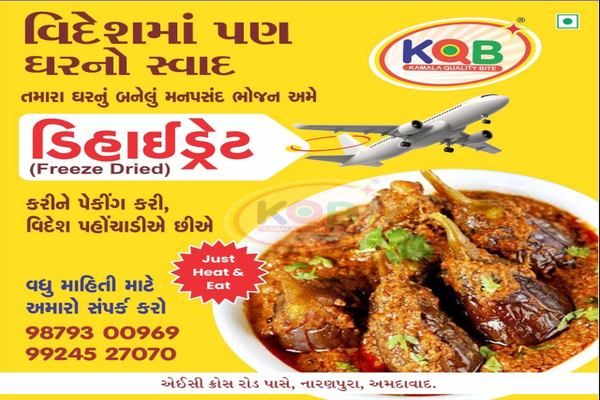
● Weight: Freeze-dried packets weigh roughly five times less than the original cooked meal, since virtually all the water content is removed while the food’s cellular structure stays largely intact — this is why it’s the preferred choice for anyone shipping food internationally or carrying it while travelling.
● Taste after rehydration: Because sublimation avoids the thermal degradation that heat-based drying causes, many customers report that properly rehydrated freeze-dried meals taste very close to the freshly prepared original — a claim that’s much harder to make about heavily heat-dried food.
The Local Process at KQB, Naranpura
1. Submit your home-cooked food in clean, disposable containers, clearly labelled, at the KQB facility in Naranpura, Ahmedabad.
2. Minimum 1 kg per unique food item — dishes cannot be combined to meet this threshold; each dish needs to individually hit 1 kg.
3. Freezing and sublimation processing — the food is frozen, then moisture is removed under vacuum in the freeze-drying chamber.
4. Moisture-resistant packaging — once processed, food is sealed to protect the extended shelf life from humidity re-absorption, which is the primary risk factor that would otherwise shorten shelf life.
5. Collection within 7–14 days, depending on the dish and current processing volume.
What Kinds of Food Actually Work Well
A genuinely wide range of home-cooked and packaged foods can be freeze-dried, including ras, dal, sabzi, full cooked meals, fruits, sweets, snacks, and gravies. If you’re unsure whether a specific dish of yours is suitable, it’s worth checking directly with the KQB team before committing your full quantity — some high-fat or very liquid preparations behave differently under sublimation than drier dishes do.
Rehydration: Just Add Water
1. Add the appropriate amount of water to the freeze-dried food.
2. Let it absorb moisture for a few minutes — exact timing varies slightly by dish.
3. Heat and consume as you would a freshly prepared meal.
Why This Matters More for Ahmedabad Families Than People Assume
This isn’t only for people already living abroad. Ahmedabad has a large base of families with children studying overseas, relatives travelling for extended work assignments, and Jain and vegetarian travellers who struggle to find trustworthy food options on the road. For all of these, freeze-dried home food solves a specific problem regular travel snacks can’t: it’s your actual home-cooked dish, not a commercial substitute, preserved in a form light enough to pack in a suitcase and durable enough to survive weeks of travel without refrigeration.
How This Differs From Dehydration — Choosing the Right Service
If your priority is maximum nutrient and flavour retention and you’re willing to pay more for it, freeze-drying is the stronger choice. If cost is the primary factor and moderate quality loss is acceptable, conventional dehydrated food packaging may suit your needs better — our companion guide on dehydrated food packaging service in Ahmedabad breaks down that trade-off in more detail.
Frequently Asked Questions
1. What is the actual difference between freeze-drying and dehydration?
Dehydration uses heat to remove moisture, which can affect taste, texture, and nutrient content. Freeze-drying removes moisture from already-frozen food through sublimation under vacuum, at much lower temperatures — which preserves the food’s original flavour, structure, and nutrients more effectively.
2. How much of the original nutrition is retained after freeze-drying?
KQB’s process is designed to preserve approximately 95% of the original nutrients, since the low-temperature sublimation process causes far less degradation of heat-sensitive vitamins and compounds than conventional heat-based drying.
3. How long does freeze-dried food last?
When stored in a cool, dry place, freeze-dried food typically lasts 12 months or longer while maintaining its quality — generally longer than conventionally dehydrated food.
4. Is there a minimum quantity for freeze-drying service?
Yes, a minimum of 1 kg per unique food item is required, and different food items cannot be combined to meet this minimum.
5. Does freeze-dried food taste different after rehydration?
One of the main advantages of freeze-drying is that it preserves the original taste and aroma closely — many customers find rehydrated freeze-dried meals taste very close to the freshly prepared version, more so than conventionally dehydrated food.
6. Can I freeze-dry food to send abroad to family?
Yes, freeze-dried food is well suited for international shipping since it’s significantly lighter and has a longer shelf life than fresh or conventionally dried food — though it’s worth checking the destination country’s food import regulations first. See our guide on freeze-dried food for international travel and students abroad for details.
Bring your home-cooked meals to KQB Food’s Naranpura facility in Ahmedabad, or explore our Dehydrated & Freeze-Dried Food range online. Find us on Google Maps.