

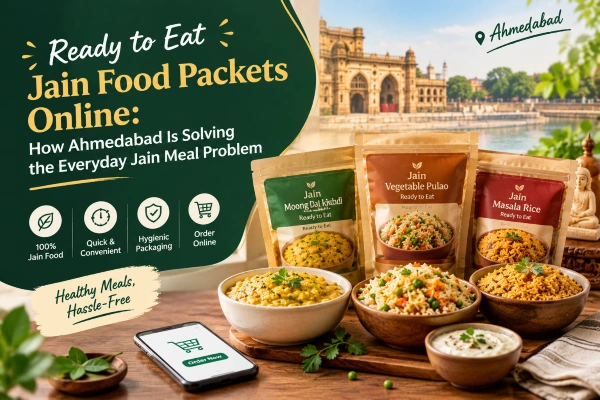
Anyone following a strict Jain diet knows the specific frustration of eating out — scanning menus for anything without onion, garlic, or root vegetables, only to end up ordering the same two or three “safe” dishes every single time. It’s a problem that doesn’t go away at home either, especially on days when there’s no time to cook a full Jain meal from scratch. This is exactly the gap that searches for ready to eat Jain food packets online are trying to solve, and Ahmedabad — home to one of India’s largest and most food-conscious Jain communities — has quietly become the place where this problem is being solved properly.
This guide looks at what actually makes a ready-to-eat Jain packet worth ordering, and which specific products are worth adding to your pantry.
Why “Ready to Eat” Is Different for Jain Food
Ready-to-eat food already has a mixed reputation — often too salty, too processed, or simply not close enough to home-cooked taste to justify the convenience. That gap gets even wider for Jain food, because most mainstream ready-to-eat brands either skip Jain options entirely or make half-hearted attempts that use onion powder or garlic-derived flavouring under generic labels.
A genuinely good Jain ready-to-eat product has to solve two problems at once: staying completely free of onion, garlic, and root vegetables like potato in dishes that traditionally rely on them for flavour and texture, while still tasting close enough to the original that it doesn’t feel like a compromise. That second part is where most attempts fall short — and it’s the specific reason demand for ready to eat Jain food packets online keeps growing, since people are actively looking for brands that get this right rather than settling for whatever’s available locally.
What to Look for Before Ordering Jain Ready-to-Eat Packets Online
Before adding anything to cart, a few checks are worth making. First, confirm the product is explicitly labelled Jain, not just “vegetarian,” since the two are not the same thing. Second, look at how the flavour is built without onion and garlic — good Jain cooking typically compensates with ingredients like asafoetida (hing), ginger, and specific spice ratios rather than skipping flavour altogether. Third, check the packaging format; vacuum-sealed, shelf-stable pouches with clear rehydration or heating instructions tend to hold up far better than simple sealed trays.
The Jain Ready-to-Eat Range Worth Ordering
KQB Food’s Jain range covers both comfort-food staples and richer restaurant-style dishes, all made strictly without onion, garlic, or root vegetables.
For a quick breakfast or evening snack, the Jain Poha and Jain Upma are two of the most practical options in the entire category. Both are dishes that Jain households already eat regularly, but making them fresh every single morning isn’t always realistic — having a ready-to-eat version means the same familiar breakfast is available in minutes, without hunting for onion-free versions of spice mixes.
On the richer side, the Jain Paneer Butter Masala recreates the classic North Indian restaurant favourite using a tomato-cashew base built up without onion or garlic, relying instead on the right balance of spice and cream to get the depth right. The Jain Palak Paneer follows the same principle, using a properly seasoned spinach gravy that doesn’t lean on onion for its base flavour, which is where many home attempts at Jain palak paneer tend to fall flat.
For anyone who’s had to skip street food specifically because of pav bhaji’s typically onion-heavy base, the Jain Pav Bhaji is worth calling out on its own. Pav bhaji is one of the hardest dishes to convincingly “Jain-ify” since so much of its flavour traditionally comes from a well-cooked onion-tomato base — getting this right, without potato either, is a genuine test of a brand’s Jain cooking expertise.
Who’s Actually Searching for This
The demand behind ready to eat Jain food packets online isn’t limited to one type of buyer. Jain students living away from home for college, working professionals in cities without easy access to Jain-specific restaurants, elderly parents who want quick, familiar meals without daily cooking, and even non-Jain households looking to reduce onion-garlic intake for personal or health reasons all show up in this search category. Ahmedabad, with its dense Jain population and strong food manufacturing base, has ended up as a natural hub for brands solving this specific need well.
How to Prepare These for the Best Result
Most ready-to-eat Jain packets, including this range, are designed for quick heating — either a short boil-in-pouch method or a stovetop warm-up after opening. Pairing something like Jain Paneer Butter Masala or Jain Palak Paneer with fresh rotis, and Jain Pav Bhaji with toasted pav, closes most of the remaining gap between “ready-to-eat” and “home-cooked,” while poha and upma need little more than a quick reheat and a garnish of fresh coriander or lemon if available.
Ordering the Full Jain Range Online
KQB Food makes its entire Jain-friendly range available for online ordering directly from Ahmedabad, covering everything from quick breakfasts like poha and upma to full dinner options like paneer butter masala, palak paneer, and pav bhaji. You can browse the complete lineup, including additional Jain dal and khichdi options, on the Dehydrated & Ready-to-Eat Food category page.
The search for ready to eat Jain food packets online usually comes from a very specific, recurring problem — wanting a proper meal without spending time hunting for onion-and-garlic-free options every single time. With a dedicated range covering breakfast, paneer dishes, and even Jain-friendly pav bhaji, ordering directly from an Ahmedabad-based maker like KQB Food means that problem gets solved once, rather than every time hunger strikes.
Frequently Asked Questions
1. What makes food “Jain” rather than just vegetarian?
Jain food excludes onion, garlic, and root or underground vegetables like potato, in addition to meat and eggs, following dietary principles rooted in minimising harm to living organisms.
2. Are ready-to-eat Jain food packets healthy?
Quality varies by brand, but well-made Jain ready-to-eat packets that avoid excessive preservatives and use proper Jain-compliant ingredients can be a reasonably balanced option for quick meals.
3. How is flavour maintained in Jain food without onion and garlic?
Good Jain cooking typically relies on asafoetida (hing), ginger, and carefully balanced spice combinations to replicate depth of flavour that onion and garlic would otherwise provide.
4. Can ready-to-eat Jain pav bhaji really taste authentic without onion or potato?
It depends heavily on preparation technique — a well-made version compensates with a thicker tomato-based mix and the right spice blend, though it will differ slightly from traditional onion-potato pav bhaji.
5. Are Jain poha and upma available as ready-to-eat options?
Yes, ready-to-eat Jain poha and upma are available for quick breakfast or snack preparation without needing to source onion-free spice mixes separately.
6. Where can I order authentic ready-to-eat Jain food packets online in India?
KQB Food, based in Ahmedabad, offers a full range of Jain ready-to-eat meals, available through their dehydrated and ready-to-eat food collection.