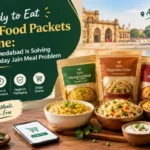


The Real Problem Jain Travellers Face Abroad
Jain dietary practice excludes not only meat, egg, and fish, but also onion, garlic, and most root vegetables — a restriction that most restaurant kitchens outside India, and even many within it, are simply not equipped to honour reliably. For a Jain student moving abroad for university, a Jain professional relocating for work, or a Jain family travelling internationally, this is not a minor inconvenience: it often means every meal requires either self-cooking from scratch or accepting food that does not actually meet the dietary requirement. Jain ready-to-eat meals exist specifically to close this gap, and understanding how they are made is useful before ordering internationally.
How Jain Ready-to-Eat Meals Are Actually Produced
Jain ready-to-eat meals in our range are prepared as full dishes first — cooked the traditional way, without onion, garlic, or excluded root vegetables — and then dehydrated or freeze-dried to remove moisture while retaining the dish’s structure and nutrient content. According to KQB Food’s own production notes, this preservation process is designed to retain the large majority of a meal’s original nutrients, rather than relying on heavy reprocessing or synthetic flavouring to compensate for what is lost. The result is a sealed packet that rehydrates back into a recognisable version of the original dish, typically by adding hot or boiling water and allowing it to sit for a few minutes.
This is meaningfully different from instant meal categories built around dehydrated vegetables and flavour powders. A Jain ready-to-eat dal makhani or palak paneer packet is the actual cooked dish, moisture-removed for shelf stability, not a reconstructed approximation.
The Core Jain Ready-to-Eat Range
KQB Food’s Eat Easy and SECO Delights lines cover the dishes Jain households actually rely on for daily meals, not just occasional treats:
• Jain Dal Makhani — the rich, buttery black lentil and kidney bean preparation, made without onion or garlic,
ready in minutes.
• Jain Palak Paneer — spinach gravy with paneer, a reliable protein-and-greens option for travellers managing
limited cooking access.
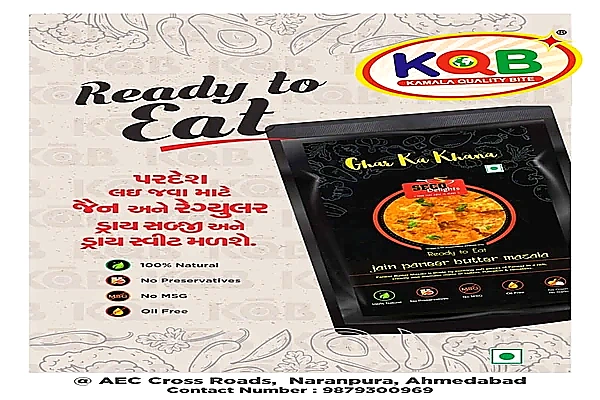
• Jain Paneer Butter Masala — the tomato-based paneer classic, prepared Jain-style for a familiar
restaurant-style flavour without the restaurant risk.
• Jain Pav Bhaji — the popular Mumbai street dish, mashed-vegetable base included, formulated without
onion and garlic.
• Jain Poha — a light, breakfast-friendly flattened-rice dish for mornings when cooking is not practical.
• Jain Khichdi Kadhi and Jain Masala Khichdi Kadhi — the classic Gujarati rice-lentil and yoghurt-curry
combination, a genuine comfort-food staple for homesick travellers.
The broader Eat Easy collection, viewable at kqbfood.com/collections/eat-easy, also includes Jain Dal Tadka, Jain Paneer Bhurji, Jain Upma, and Jain Veg Makhanwala for buyers who want a fuller weekly rotation rather than a handful of single dishes.
Why This Matters More for International Orders Than Domestic Ones
Within India, a Jain traveller can usually find at least one restaurant or home-cook willing to accommodate the diet, even if imperfectly. Outside India — particularly in countries with limited Indian restaurant density, or on multi-week travel itineraries through Europe, Southeast Asia, or remote work destinations — that fallback often does not exist. Jain ready-to-eat meals become less of a convenience and more of a dietary safety net, which is why shelf stability, correct labelling, and rehydration reliability matter far more for this buyer than for someone ordering the same meals for occasional use at home.
Practical Guidance for Ordering Internationally
• Order a small mixed selection first if you have not tried dehydrated Jain meals before, to confirm the rehydrated texture and spice level suit your preference.
• Favour dal- and gravy-based dishes (dal makhani, palak paneer, paneer butter masala) for the most reliable rehydration results, since these formats tolerate the hot-water process best.
• Check your destination country’s food import regulations before placing a large international order, since rules on packaged food imports vary by country.
• Store packets in a cool, dry place after arrival; the dehydration process is designed for shelf stability, not refrigeration dependency.
For a broader view of how the entire dehydrated and freeze-dried category works, including turnaround times and packaging standards, see our detailed Ready to Eat page and the full Dehydrated Food (Freezed-Dried Food) category.
Frequently Asked Questions
1. Are these Jain meals genuinely free of onion and garlic, or just “mild”?
They are prepared according to Jain dietary requirements, which specifically exclude onion, garlic, and most root vegetables, not simply reduced-spice versions of the standard recipe.
2. How do I prepare a Jain ready-to-eat packet?
Most dishes are prepared by adding hot or boiling water to the dehydrated contents and allowing them to rehydrate for a few minutes before serving; exact instructions are listed on each product page.
3. Do these meals need refrigeration during international shipping?
No. Dehydration and freeze-drying remove the moisture that would otherwise require refrigeration, which is what makes these meals practical to ship internationally.
4. Is nutrition significantly lost during the dehydration process?
The dehydration and freeze-drying methods used are designed to retain the large majority of the original dish’ nutrients, unlike heavily processed instant-meal alternatives.
Order Jain Ready-to-Eat Meals Online
Browse the full Eat Easy collection and Dehydrated Food category at kqbfood.com. See our Ahmedabad facility on Google: KQB Food, Naranpura.