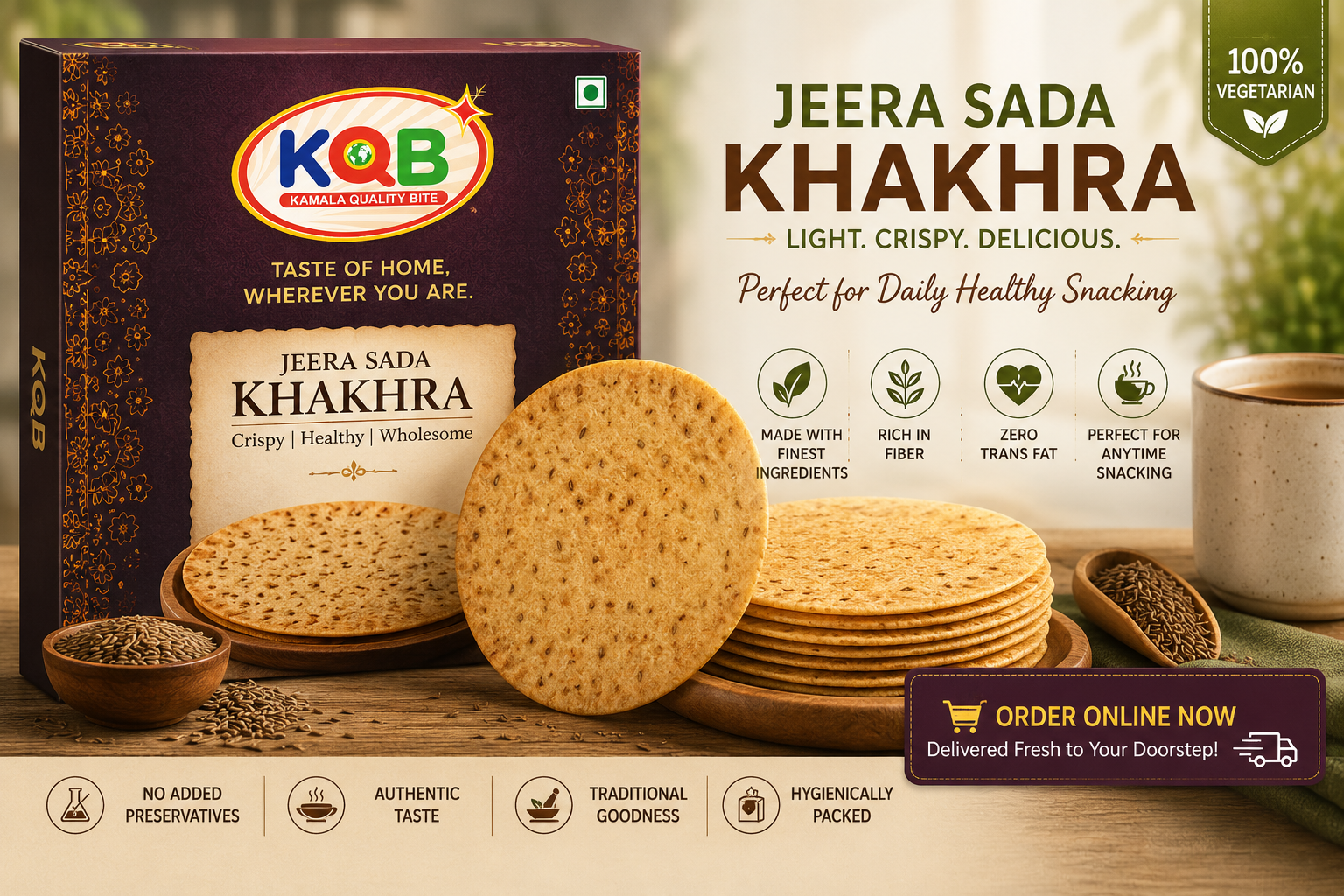
There’s something comforting about having a light, crunchy snack around when hunger hits between meals. Not the oily kind that leaves you feeling heavy after five bites. Something simple. Familiar. Easy to eat with chai, during work calls, or even while traveling. That’s exactly why so many people are now choosing jeera sada khakhra for daily snacking.

It’s not a “trend snack,” honestly. It has been part of Indian kitchens for years, especially in Gujarati homes. But now, with busy schedules and people trying to eat a little cleaner, more families are starting to order jeera sada khakhra online instead of stocking regular fried snacks. And it makes sense.

Why Jeera Sada Khakhra Works So Well as an Everyday Snack

Most snacks taste good for ten minutes, and then you regret eating them—too spicy, too oily, too much masala. Khakhra is different. Jeera sada khakhra is light, roasted, crisp, and doesn’t overpower your taste buds. The cumin flavor gives it that subtle earthy taste without making it too rich. You can eat it in the morning, afternoon, late night, or honestly, anytime.

Many people who switch to khakhra notice one thing quickly — they don’t feel that “snack guilt” afterward. It fills the small hunger gap without making you sluggish. And because it’s roasted instead of deep-fried in most cases, it naturally becomes a better option for daily munching.

At KQB, this is one of the reasons customers keep coming back for traditional khakhra varieties. Simple flavors usually last longer in people’s routines than heavily loaded ones.

The Convenience of Ordering Khakhra Online

Earlier, people mostly bought khakhra from local stores or during family visits to Gujarat. Now things are different.

You can order fresh jeera sada khakhra online and have it delivered directly home without hunting through multiple shops. That convenience matters more than people think, especially for working professionals or families trying to keep healthier snack options available.

In real situations, many buyers order khakhra not just for themselves but for parents, hostel students, or even office snack drawers. And honestly, online ordering gives you more consistency, too.

When you find a brand that maintains proper roasting, freshness, and texture, you stick with it. Nobody likes khakhra that turns chewy after two days.

A Snack That Fits Modern Eating Habits

One reason jeera sada khakhra has stayed relevant is that it fits into modern eating patterns surprisingly well. People today don’t always sit for full meals on time. Some skip breakfast. Some snacks while commuting. Others want smaller portions throughout the day instead of heavy meals.

Khakhra fits naturally into all of this. You can pair it with curd, pickle, tea, black coffee, hummus, or eat it plain. Some even crush it over salads for extra crunch.

And unlike many packaged snacks, it doesn’t feel overly processed when made properly. That matters now. People read labels more carefully than before.

The Simple Flavor Is Actually the Biggest Advantage

The funny thing is, many flavored snacks become tiring after a while. Too much peri peri, cheese, or artificial seasoning, and your taste buds need a break. Jeera sada khakhra stays balanced.

The cumin adds enough flavor without becoming overwhelming. It’s one of those snacks you can eat regularly without getting bored quickly. That’s probably why older generations still prefer simple khakhra over experimental versions.

Even kids who usually avoid “healthy snacks” often end up liking jeera flavor because it’s mild and familiar. At KQB, customers often start by trying fancy variants but eventually reorder the classic jeera sada version more frequently. It becomes a dependable everyday option.

Good for Travel, Office, and Busy Days

If you travel often, you already know how difficult it is to find clean, light snacks on the road. Airport food gets expensive. Highway snacks are usually oily. Office cafeterias aren’t always reliable either. Khakhra solves that problem quietly.

It stays fresh for longer when packed correctly, doesn’t create a mess, and is easy to carry. A few pieces in your bag can honestly save you from random junk food cravings during long workdays.

A lot of people now keep healthy Indian snacks at their desks because constant ordering from food apps becomes exhausting after a point. And unlike chips packets that disappear instantly, khakhra feels more satisfying.

What People Usually Look for While Ordering Online

When customers buy jeera sada khakhra online, they usually care about a few practical things more than fancy marketing. Freshness is a huge factor. Nobody wants stale khakhra.

Texture matters too. It should feel crisp without becoming too hard to bite. Some brands over-roast it, and that ruins the experience completely.

Then comes ingredient quality. Clean wheat flour, balanced spices, proper roasting. Simple things. But they make all the difference. Packaging also matters more than people realize. Even good khakhra can lose crunch if packing is weak. That’s why trusted sellers generally focus on consistency instead of just offering dozens of random flavors.

Healthy Snacking Doesn’t Need to Feel Boring

One misconception people have is that healthy snacks automatically taste bland. Not true. Traditional Indian snacks, when prepared properly, already offer a better balance than many modern packaged foods. Khakhra is a good example of that.

It gives a crunch. Flavor. Fullness. But without the excessive oiliness, people are trying to avoid it nowadays. And because jeera sada khakhra is so versatile, you can keep changing how you eat it.

Some people add chopped onions and tomatoes on top like mini masala bites. Others pair it with green chutney or homemade dips. A few even eat it alongside soup instead of breadsticks. Simple food tends to adapt well.

Why Traditional Snacks Are Making a Comeback

Over the last few years, many people have slowly gone back to traditional Indian snack options. Not because they’re fashionable. Mostly because they’re practical.

Things like khakhra, roasted chana, makhana, and poha mixes already fit naturally into Indian eating habits. They don’t feel foreign or forced. And honestly, people are becoming tired of ultra-processed snacks pretending to be healthy.

Traditional snacks usually carry familiarity, too. They remind people of home, family kitchens, train journeys, and evening chai breaks. Food memories matter more than brands sometimes.

That emotional connection is part of why snacks like jeera sada khakhra continue growing in online demand.

A Smarter Everyday Snack Choice

Daily snacking is not going away. People will always need something quick between meals. The real question is what kind of snack becomes part of your everyday routine.

Jeera sada khakhra works because it keeps things simple. Light texture, balanced taste, easy storage, less heaviness, and enough crunch to actually satisfy cravings. No unnecessary drama.

If you’ve been trying to move toward smarter snack choices without completely giving up taste, this is honestly one of the easiest switches to make. And with reliable online options available now, getting fresh khakhra delivered home has become much easier than before.

Brands like KQB are helping bring traditional everyday snacks into modern lifestyles without changing what made them good in the first place.

FAQs

(1) Is jeera sada khakhra good for everyday snacking?

Yes, jeera sada khakhra is often preferred for daily snacking because it is light, roasted, and easy to eat between meals. Many people choose it over fried snacks for regular tea-time or office munching.

(2) Why are people buying khakhra online now?

More people are ordering khakhra online because it saves time and offers better variety and freshness. Online ordering also makes traditional Gujarati snacks easily available outside Gujarat.

(3) Is khakhra healthier than regular packaged snacks?

Khakhra is usually considered a better option than heavily fried snacks because it is roasted and lighter. People looking for balanced snacking often include khakhra in their daily routine.

(4) Can jeera khakhra be eaten during dieting?

Many people add jeera khakhra to diet plans because it feels filling without being too heavy. Portion control and simple ingredients make it a convenient snack for mindful eating.

(5) What makes jeera sada khakhra different from flavored khakhra?

Jeera sada khakhra has a mild cumin flavor and a simple taste that works well for everyday eating. Unlike heavily seasoned variants, it does not feel overpowering after repeated consumption.

Living abroad sounds exciting in the beginning. New country, new routines, better opportunities, different lifestyle. But after some time, one thing almost every Indian living in the USA or UK starts missing is simple, homemade Indian food. Not restaurant food. Not heavy buffet curries—just regular everyday meals.

Dal-chawal after work. Khichdi on tired days. Poha in the morning. Familiar flavors that feel comforting after long schedules and cold weather. That emotional connection with food becomes stronger when you live away from home.

And honestly, this is exactly why dehydrated Indian foods are becoming increasingly popular among NRIs in countries like the USA and UK.

They solve a very practical problem — how to eat familiar Indian food regularly without spending hours cooking every day.

Cooking Abroad Isn’t Always Easy

Many people in India assume cooking abroad is simple once you “settle down.” In reality, daily life in countries like the USA and the UK can become extremely busy.

Work schedules are demanding. Commutes are long. Grocery shopping takes planning. Fresh Indian ingredients may not always be easily available nearby. And after a full workday, cooking elaborate Indian meals from scratch feels exhausting for many people. Even students face similar struggles.

In real situations, many NRIs either end up ordering takeout frequently or skipping proper meals because cooking daily becomes difficult to maintain consistently. That’s where dehydrated Indian foods quietly become useful.

What Makes Dehydrated Indian Foods So Practical

The biggest advantage is convenience without completely losing familiarity. Dehydrated Indian foods are lightweight, easy to store, travel-friendly, and usually quick to prepare. Most products require hot water or minimal cooking time. For busy NRIs, this saves both effort and planning.

You don’t need to chop vegetables after work every evening. You don’t need to spend hours preparing gravies from scratch. And honestly, sometimes just reducing cooking stress by even 30 minutes makes daily life easier, especially during weekdays.

Many people living abroad now keep ready-to-cook Indian food packs at home specifically for hectic workdays, winter evenings, travel schedules, or emergency meals.

Familiar Indian Food Matters More Than People Think

Food becomes emotional when you live far from home. People often underestimate this part. Simple Indian meals create comfort in ways that convenience food from other cuisines sometimes cannot. A bowl of khichdi during stressful days. Gujarati dal on weekends. Poha during busy mornings. These small things help people feel connected to home life.

That’s why dehydrated Indian meals are growing among NRIs. They’re not just convenient products. They recreate familiar routines.

And honestly, many NRIs don’t necessarily want restaurant-style heavy food every day. They miss lighter homemade-style meals more. That’s a major reason simple Indian food products are gaining popularity internationally.

Storage Convenience Is a Huge Benefit

One challenge many NRIs face abroad is managing groceries properly. Fresh vegetables spoil quickly. Refrigeration space becomes limited in shared apartments. Weekly grocery runs are time-consuming. Indian cooking ingredients may also cost more depending on location.

Dehydrated foods simplify this a lot. They usually have longer shelf life, require less storage space, and remain available whenever needed. This makes them practical for students, working professionals, families, and even elderly parents visiting abroad.

Many NRIs specifically prefer products that reduce kitchen dependency without forcing them to compromise completely on Indian flavors. That balance matters.

Travel-Friendly Food Is Important for NRIs

Another major reason dehydrated Indian foods are growing is travel convenience. NRIs frequently travel between cities, countries, and even back to India. During travel, finding proper Indian meals consistently can become difficult and expensive. Portable Indian meal packs solve this problem.

People carry dehydrated foods during long work trips, university stays, family vacations, or even while relocating abroad initially.

And honestly, for many first-time international students, ready Indian food packs become survival essentials during the first few months overseas.

Not because they can’t cook at all — but because adjusting to a new country already feels overwhelming enough.

The USA & UK Markets Are Changing Fast

Consumer demand for Indian ready-to-cook and dehydrated food products is increasing steadily in countries like the USA and the UK.

Partly because the Indian diaspora is large. But also because lifestyles abroad are becoming faster and more convenience-focused overall. NRIs today want food solutions that fit modern schedules while still preserving cultural familiarity.

This is why traditional Indian food brands are expanding globally through online ordering and international shipping. Earlier, people mostly depended on local Indian grocery stores with limited variety. Now access has improved significantly.

At (KQB), growing interest in convenient Indian food options reflects how modern consumers abroad want practical products that still feel connected to authentic Indian taste preferences.

Health Awareness Is Influencing Food Choices Too

Another important shift happening among NRIs is health-conscious eating. Many people abroad become more careful about their daily food habits because eating out can quickly become expensive, oily, and unhealthy in the long term.

Dehydrated Indian foods often feel more manageable because portion sizes are controlled and preparation remains simpler. Consumers also increasingly prefer foods with recognizable ingredients instead of highly processed frozen meals. Of course, buyers still compare quality carefully.

Taste, ingredient quality, freshness, and authenticity matter a lot. If products feel artificial or too processed, customers usually don’t reorder.

That’s why brands focusing on simpler, home-style Indian meals often build stronger trust among NRI consumers.

Technology Is Improving Food Quality

Earlier, many people associated dehydrated food with poor texture or bland taste. But food technology has improved significantly now.

Better dehydration methods, freeze-drying processes, moisture control, and packaging systems are helping maintain flavor and freshness much better than before. Consumers notice this difference immediately.

If food rehydrates properly and still tastes close to traditional Indian cooking, people are much more likely to include it in regular meal routines. And honestly, consistency matters more than fancy marketing in food products.

NRIs especially value products that deliver reliable taste repeatedly because familiar food becomes part of emotional comfort abroad.

Dehydrated Indian Foods Fit Modern Lifestyles

One reason this category will likely keep growing is that it fits naturally into modern urban living. People everywhere are trying to save time while still eating better.

The USA and UK lifestyles especially encourage convenience-driven eating habits. But Indian consumers still prefer flavor, comfort, and familiarity alongside convenience. Dehydrated Indian foods quietly solve all three needs together—quick preparation. Easier storage. Familiar meals. That combination works well for busy professionals, students, young families, and older adults alike.

Why This Trend Will Continue Growing

The future of dehydrated Indian foods among NRIs looks strong because the demand comes from real lifestyle needs, not temporary trends.

People living abroad aren’t searching for “perfect food.” They’re looking for practical ways to stay connected to Indian eating habits without making everyday cooking feel exhausting. And honestly, small conveniences matter a lot in busy lives.

Being able to prepare familiar Indian food quickly after a long workday may sound simple, but for many NRIs, it genuinely improves daily life abroad.

KQB is becoming part of this shift by offering convenient Indian food solutions that support modern international lifestyles while still keeping traditional flavors familiar and accessible.

FAQs

(1) What are dehydrated Indian foods?

Dehydrated Indian foods are meal or snack products where moisture is removed to improve shelf life and storage convenience. These foods can usually be prepared quickly by adding hot water or minimal cooking.

(2) Why are dehydrated Indian foods becoming popular among NRIs?

Many NRIs in the USA and UK prefer dehydrated Indian foods because they make everyday cooking easier while still offering familiar Indian flavors and meals.

(3) Are dehydrated Indian meals convenient for working professionals abroad?

Yes, dehydrated Indian meals are widely preferred by busy professionals because they save cooking time and reduce daily meal preparation stress after long work schedules.

(4) Why do NRIs prefer ready-to-cook Indian foods?

Ready-to-cook Indian foods help NRIs enjoy familiar homemade-style meals without spending hours preparing ingredients and cooking from scratch every day.

(5) Can dehydrated Indian foods help students living abroad?

Yes, many international students keep dehydrated Indian food packs because they are easy to prepare, affordable to store, and helpful during busy academic schedules.

There was a time when ready-to-eat food had a slightly bad reputation. People connected it with overly processed meals, too much sodium, or something you only ate during emergencies. But honestly, urban lifestyles have changed so much in the last few years that the conversation around Dehydrated Food (Freeze – Dried Food) is changing too.

Today, convenience is no longer a luxury. For many working professionals, students, young couples, and even elderly people living alone, it’s become part of everyday life. And the interesting part is — people still want familiar Indian flavors.

Nobody wants to survive only on bland instant noodles or frozen foreign meals forever. At some point, you start craving proper dal, poha, khichdi, upma, parathas, or simple Indian snacks that actually feel satisfying. That’s exactly where ready-to-eat Indian food is slowly finding its place.

Urban Life Is Faster Than Ever

Most city routines are honestly exhausting now. People leave home early, spend hours commuting, manage unpredictable work schedules, and somehow still try to maintain health, social life, fitness, and family time. Cooking elaborate meals every single day just isn’t realistic for everyone anymore.

Even people who enjoy cooking often don’t have the energy daily. In real situations, many urban households are now looking for “practical food solutions” instead of idealized kitchen routines. That’s why instant Indian meals, healthy snack packs, ready-to-cook options, and travel-friendly foods are growing quickly.

The future of ready-to-eat Indian foods is not about replacing homemade meals completely. It’s more about filling the gaps modern lifestyles have created.

People Want Convenience — But Not at the Cost of Taste

One thing many food brands misunderstood earlier was this: Indian consumers rarely compromise on taste. You can make food fast. Fine. But if it doesn’t feel authentic, people won’t reorder it.

That’s why newer ready-to-eat Indian food brands are focusing more on regional flavors, traditional recipes, and simpler ingredients. Consumers have become smarter, too. They check labels, compare ingredients, and avoid products that feel overly artificial.

Many people now prefer ready-to-eat foods that taste close to home-style cooking instead of restaurant-style heaviness. Simple meals are winning again.

Khichdi bowls, millet snacks, roasted namkeen, vacuum-packed curries, ready poha mixes — these products fit better into daily urban life because they feel lighter and more practical.

At (KQB), this shift is visible in how customers respond to traditional Indian snack options that balance convenience with familiarity.

The Rise of Health-Conscious Snacking

Another major reason ready-to-eat Indian foods are growing is health awareness. Earlier, convenience food mostly meant junk food. But now consumers actively search for healthier ready-to-eat snacks and meals that support daily routines instead of disrupting them.

People want lighter snacks, roasted instead of fried, easier to digest, and portion-friendly. That’s why traditional Indian foods are quietly becoming modern again.

Things like khakhra, roasted chana, makhana, millet-based snacks, dry fruit mixes, and baked Indian snacks fit naturally into health-conscious lifestyles without feeling extreme or restrictive.

And honestly, many urban consumers are tired of imported “health foods” that don’t match Indian eating habits. Traditional Indian ready-to-eat foods already understand local taste preferences better.

Technology Is Improving Food Quality

One reason ready-to-eat food struggled earlier was shelf-life quality. Products either tasted stale or overly preserved.

But food packaging and preservation technology have improved a lot now. Better sealing methods, vacuum packaging, controlled dehydration, and cleaner processing systems are helping brands maintain freshness longer without completely ruining texture or flavor. Consumers notice these things immediately.

A ready-to-eat product that stays fresh, travels well, and still tastes good after opening has a much better chance of becoming part of someone’s regular routine. This is especially important for urban buyers ordering food products online.

Because let’s be honest — once someone receives stale snacks or poor-quality packaging, trust disappears very quickly.

Working Professionals Are Driving the Biggest Demand

If you look closely, working professionals are probably the biggest users of ready-to-eat Indian foods right now.

Office schedules are unpredictable. Lunch breaks become shorter. Meetings stretch unexpectedly. People often skip meals and then overeat later. Ready-to-eat food fills these awkward gaps.

A quick breakfast before commuting. Light snacks between meetings—easy dinner after late work hours. Small things, but they matter daily.

Many professionals now keep healthy, ready-to-eat snacks in office drawers because relying entirely on food delivery apps becomes expensive and unhealthy over time. And honestly, people are becoming more selective about what they eat during workdays. Heavy, oily meals every afternoon don’t work for productivity.

The Emotional Side of Indian Food Still Matters

This part often gets ignored in business discussions. Food is emotional in India. People don’t just eat for convenience. They want comfort, familiarity, routine, and memories, especially in stressful urban environments.

That’s why Indian ready-to-eat foods have stronger long-term potential compared to generic fast-food alternatives.

A simple, ready-to-eat poha pack may remind someone of home breakfasts. Khakhra with evening tea feels familiar. Ready dal-chawal after a long day can feel surprisingly comforting. The emotional connection makes a huge difference in repeat buying behavior.

Many people living away from family actually look for ready-to-eat Indian products because they recreate small parts of home life.

Online Shopping Is Expanding the Market Fast

E-commerce has completely changed how food brands reach consumers. Earlier, regional Indian snacks and ready-to-eat products stayed limited to local stores. Now brands can deliver nationwide. That changes everything.

Consumers now explore traditional Indian foods from different states without traveling. Someone in Bangalore can order Gujarati snacks. A Mumbai customer can try Rajasthani ready mixes. Smaller brands also get the visibility they never had before. This online growth is helping niche Indian food businesses compete in a bigger market.

At (KQB), online demand has shown that customers are actively searching for convenient Indian snack options that still feel authentic and trustworthy.

The Future Will Likely Focus on Balance

Ready-to-eat Indian food is not replacing fresh cooking entirely. It probably never will. But it is becoming a reliable support system for modern lifestyles.

The future seems less about “instant junk food” and more about balanced convenience. Consumers want products that save time while still fitting into healthier everyday eating habits. Brands that understand this balance will likely grow stronger over the next few years.

Because urban consumers today are practical. They don’t expect perfection. They want food that is convenient, reasonably healthy, satisfying, and familiar enough to fit naturally into real life.

Where Things Are Heading Next

The interesting thing is that ready-to-eat Indian foods are evolving quietly, not dramatically. People are moving toward smarter convenience instead of flashy convenience.

Simple products with clean ingredients, traditional flavors, travel-friendly packaging, and realistic pricing will probably shape the next phase of this market. And honestly, that shift feels more sustainable.

KQB is also seeing this change closely, where customers now prefer familiar Indian food options that fit naturally into busy schedules without feeling overly processed.

Consumers are no longer impressed by “modern snacks” pretending to be healthy. They’re going back to foods they already trust — just in more convenient formats.

That’s why the future of ready-to-eat Indian foods looks strong, especially in busy urban lifestyles where time is limited but food preferences remain deeply personal.

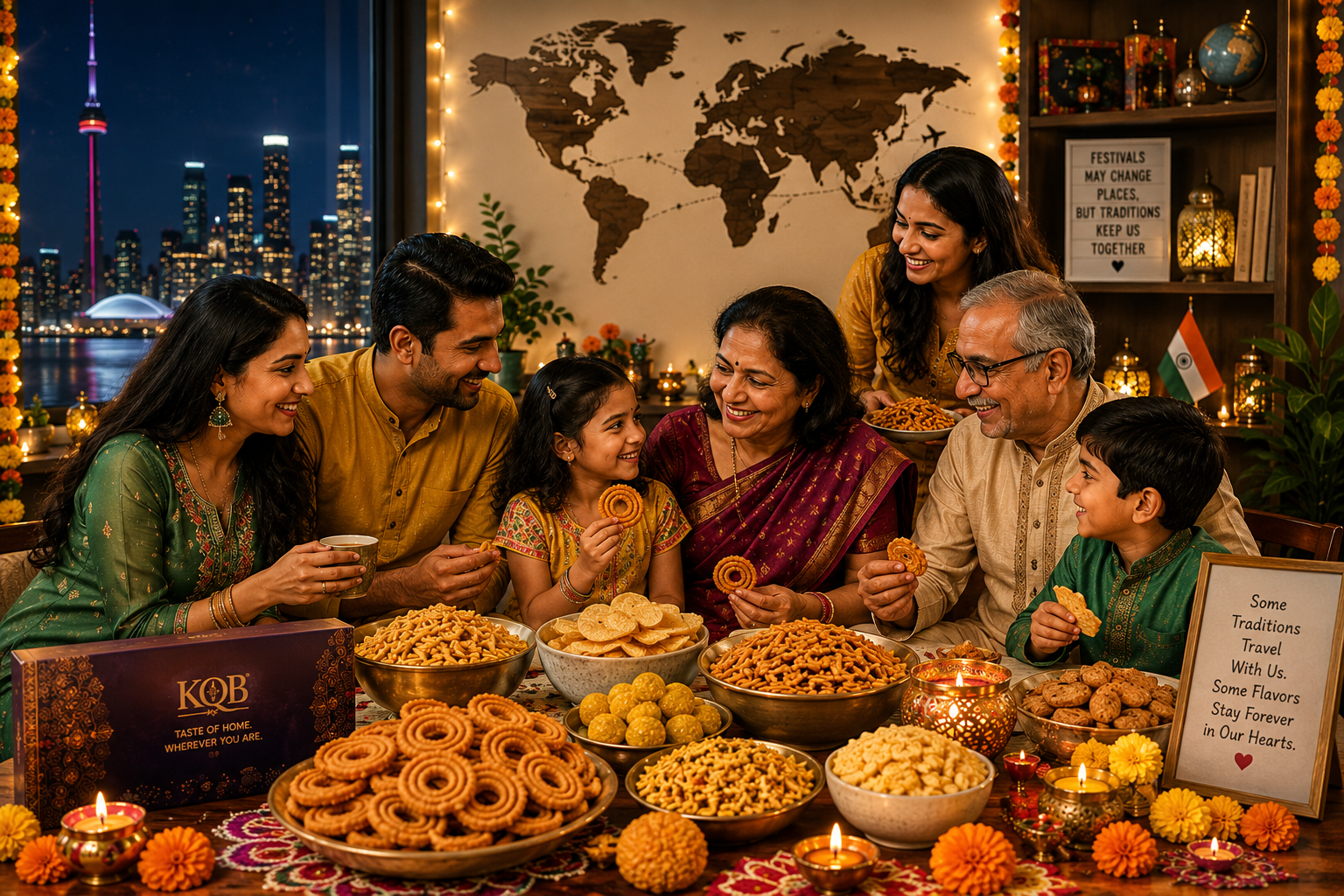
At KQB, we’ve noticed something over the years. People living abroad don’t just order snacks during Indian festivals because they’re hungry. They order them because they miss something. Sometimes it’s home. Sometimes it’s a person.

Sometimes it’s just that feeling of opening a fresh packet of chevdo during Diwali while everyone in the house is busy decorating or sitting with family and sharing Homemade Khakhra that somehow tastes exactly like home. And honestly, if you’ve ever celebrated an Indian festival outside India, you probably understand this already.

Festivals abroad can still be beautiful. Families make the effort. Communities come together. People dress up, cook together, visit temples, join local garba nights, and organize Diwali events in community halls. All of that happens. But still, there’s always a small gap somewhere. Food usually fills it. Not restaurant food necessarily. Not heavy meals either. Real regional Indian snacks.

The kind you grew up eating without even thinking twice about them. That’s why so many families today prefer to Buy Indian Namkeen Online or look for authentic Gujarati Khakhra Online during the festival season abroad.

Festivals abroad make people emotionally connected to food again

Back in India, festive snacks are just part of life. Every house has something stored in containers before Diwali starts. Kitchens smell different during festival season. Somebody’s mother is frying chakli. Someone else is packing mathiya into steel dabbas. You don’t even realize how important these things are when you’re surrounded by them all the time. But once people move abroad, these small things suddenly become emotional anchors.

At KQB, we hear this almost daily from customers in the US, UK, Canada, Australia, and even smaller Indian communities in Europe. People say things like: “This tastes exactly like what we had at home.”  Or sometimes: “We opened this during Diwali, and suddenly the whole house felt festive.” That’s not marketing language. That’s the real emotion attached to regional Indian snacks. And honestly, that emotional value becomes stronger during festivals because homesickness becomes louder around that time.

Regional snacks feel more personal than generic Indian food

One thing we’ve learned at KQB is this — Indians abroad don’t just search for “Indian snacks.” They search for familiarity.

Gujarati families look for fafda, khakhra, chorafali, and spicy chevdo. South Indian families ask for murukku and ribbon pakoda during festive periods. Maharashtrian customers miss the proper chakli that actually tastes homemade. Some people specifically ask if the masala tastes “like back home.” That detail matters.

Because India is not one flavor, every region has its own festive food memories attached to celebrations. And those memories don’t disappear after moving abroad. In fact, they become stronger.

A person living in Toronto may easily find paneer curry or dosa somewhere nearby now. Indian restaurants are everywhere. But authentic regional festive snacks? That’s still difficult in many places.

Which is why families often ask relatives travelling from India to carry extra snack boxes in their luggage. We’ve seen it happen for years.

During festivals, snacks become part of family rituals

This is something people outside India understand immediately. Festivals aren’t only about puja or decorations. They’re built around little routines.

  • Evening chai with namkeen while guests arrive.
  • Opening snack boxes after temple visits.
  • Serving something crunchy to relatives sitting in the living room.
  • Late-night conversations during Diwali cleanup.

Regional Indian snacks quietly sit inside all these moments.

At KQB, we try to remember that we’re not just shipping food products abroad. We’re becoming part of somebody’s family festival experience. And honestly, that responsibility matters to us.

For many people overseas, these snacks are tied directly to memories of parents, grandparents, siblings, and childhood celebrations. You can’t fake that connection with fancy branding alone.

Kids growing up abroad understand culture through food first

A lot of Indian parents abroad worry about cultural disconnect. It’s natural. Languages slowly become weaker over generations. Traditions become simplified because life abroad works differently. But food still survives somehow.

We’ve seen parents order traditional snacks from KQB before festivals, specifically so their kids experience what they grew up eating in India. Not because the children fully understand the regional significance yet. But because food creates familiarity.

A child may forget festival dates later. But they’ll remember eating chakli during Diwali. They’ll remember boxes of sweets and snacks arriving before celebrations. They’ll remember family gatherings where everyone was eating together. That’s how culture quietly continues. Not always through lectures or traditions alone. Sometimes through taste. And regional snacks play a huge role in that because they keep regional identity alive, too.

Authentic taste matters more than perfect packaging

One thing we learned very early at KQB — people abroad care deeply about authenticity. Not just appearance. Actually, many customers prefer snacks that feel homemade over products that look overly commercial or factory-perfect.

Because traditional Indian snacks were never supposed to be identical in shape or texture every single time.

  • Real chakli breaks differently.
  • Fresh chevdo has uneven spice coating sometimes.
  • Homemade-style snacks feel alive.

People recognize that immediately. Especially during festivals, customers don’t want snacks that taste “internationalized.” They want something that reminds them of home kitchens, local farsan shops, and family gatherings.

That emotional honesty matters more than polished presentation. And honestly, we think that’s a good thing.

Festivals abroad create emotional buying decisions

Something interesting happens during Indian festivals overseas. People buy emotionally. A family may spend far more on snack deliveries during Diwali than they normally would during regular months. Not because they suddenly need more food. But because festivals make people want connection.

Students living alone abroad order familiar snacks because festivals feel lonely sometimes. Parents send festive boxes to children studying overseas. Families organize gatherings and want tables that feel “complete.” And somehow, regional snacks become part of creating that emotional comfort.

Indian communities abroad bond through food naturally

One beautiful thing about Indian festivals abroad is how communities come together. People share food constantly during celebrations.

  • Someone brings homemade namkeen.
  • Someone else brings sweets from India.
  • Conversations start around snacks before anything else.

And regional foods often become conversation starters, too.

  • “Where did you get this from?”
  • “This tastes exactly like Home.”
  • “My grandmother used to make this.”

Food creates instant familiarity between strangers who may come from completely different parts of India.

That’s why regional Indian snacks matter so much during festivals abroad. They help people feel culturally grounded even when they’re thousands of kilometers away from home.

At KQB, we understand it’s bigger than snacks

For us, this business has never been only about selling products. It’s about helping people recreate a feeling.

  • A festive evening that feels closer to home.
  • A family gathering that feels complete.
  • A small moment of comfort during celebrations abroad.

Because at KQB, we know this is bigger than snacks alone. Anyone can sell packaged food. But creating something that reminds people of home, family gatherings, late-night festival conversations, and familiar kitchen flavors — that takes care, understanding, and authenticity. Maybe that’s exactly why regional Indian snacks start meaning even more when people are living far away from home.

FAQs

(1) Why do regional Indian snacks feel more important during festivals abroad?

Regional Indian snacks often remind NRIs of family celebrations, local traditions, and festive memories from home, making festivals abroad feel more emotionally connected and familiar.

(2) Why do NRIs order Indian snacks online during festivals?

Many NRIs order Indian snacks online during festivals because authentic regional snacks can be difficult to find locally in countries like the USA, UK, Canada, and Australia.

(3) Which Indian snacks are popular during festivals abroad?

Snacks like khakhra, chevdo, fafda, chakli, chorafali, sev, and traditional namkeen are commonly enjoyed during Indian festival celebrations overseas.

(4) Can I buy Gujarati khakhra online for festivals abroad?

Yes, many families now order Gujarati khakhra online from brands like KQB to recreate familiar festive food experiences while living abroad.

(5) Why do Indian families abroad prefer regional snacks over generic snacks?

Regional snacks often carry stronger emotional and cultural familiarity because they are connected to specific family traditions, local flavors, and childhood memories.