

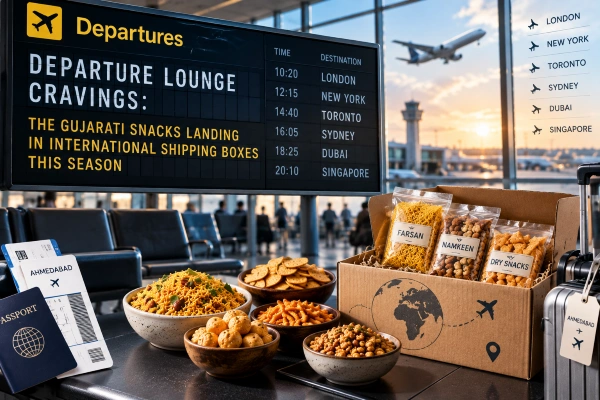
There’s a specific kind of shopping list that starts forming a few weeks before a flight back to the US, UK, Canada, or the Gulf — not clothes or gifts, but a very particular set of namkeen names scribbled down after a WhatsApp call with someone still in Gujarat. Increasingly, though, that list isn’t waiting for a flight at all. It’s going straight into an international order, shipped directly rather than carried back in a suitcase.
Looking at what’s actually landing in these international shipments — rather than assuming it’s just “whatever’s popular in India” — reveals a pattern shaped as much by shelf life and travel practicality as by taste alone.
Sev Orders Abroad Are Getting More Specific
A few years ago, an international order might have simply said “sev” and left it at that. That’s no longer really the case. Buyers abroad are now requesting specific variants by name, often because they’ve had a chance to try more than one and have settled on a clear favourite.
The Garlic Sev has become a particularly frequent international request, likely because its stronger, more distinct flavour holds up well even after weeks in transit, unlike more delicate variants that can lose some character over a long shipping window. The Jini Tikhi Sev shows up often too, usually from buyers who’ve specifically mentioned missing the sharper, spicier bite that’s harder to replicate with locally available Indian sev abroad. Meanwhile, the Palak Fudina Sev is gaining traction among households abroad trying to introduce their India-born parents’ generation of flavours to children who’ve grown up eating milder food overseas.
The dependable trio — Aloo Sev, Aloo Mari Sev, and Aloo Palakh Sev — still anchors most international orders, largely because they’re familiar enough to appeal across generations within the same household abroad.
Ganthiya Requests Are Increasingly Specific by Name
International orders for ganthiya have moved well past generic requests too. The Bhavnagari Ganthiya remains the most requested by far, often tied directly to recreating a Sunday jalebi-ganthiya breakfast that doesn’t quite feel the same with a generic substitute found in overseas Indian grocery stores. The Athanu Bhavnagari Ganthiya has also started appearing more frequently in repeat international orders, generally from buyers who’ve already tried the classic version and specifically gone looking for the tangier one afterward.
Shelf-Stable Regional Specialties Are Traveling Further Than Expected
Some items that might seem too regional to travel well internationally are turning up more often than expected. The Baroda No Lilo Chevdo is a good example — its herby, green-chilli flavour doesn’t fade much over a long shipping period, making it a solid choice for buyers who want something that tastes distinctly homemade rather than mass-produced. The Bardoli Na Dry Patra fits a similar pattern, appealing to households abroad who loved fresh patra back home but have no easy way to recreate it in a kitchen overseas — the dry, shelf-stable format solves that gap directly.
The Bhadran Moong is also seeing steady international demand, often from buyers specifically looking for a lighter, protein-forward snack that fits better with the more health-conscious eating habits many adopt after moving abroad.
Vacuum-Packed Bhakhri Is the Clear Winner for International Orders
If there’s one format that’s disproportionately favoured in international shipments compared to domestic orders, it’s vacuum-packed bhakhri. Given how much longer international shipping takes compared to a delivery within India, the difference in shelf life between regular and vacuum-sealed packaging becomes far more noticeable. The Bhakhri Jeera Vacuum and Bhakhri Mari Vacuum consistently outperform their standard counterparts in international orders for exactly this reason, while the regular Bhakhri Jeera, Bhakhri Mari, and Bhakhri Methi still get requested by buyers closer to a shipping route or those planning to consume them sooner after arrival.
Bhel: The One Item Ordered Purely on Impulse
Unlike almost everything else on this list, the Bhel doesn’t fit a neat travel-practicality pattern — it’s typically added to international orders somewhat spontaneously, usually by someone craving a taste of Indian street-style chaat that’s genuinely difficult to recreate with locally sourced ingredients abroad.
Why Understanding This Pattern Matters for International Buyers
Ordering Gujarati snacks internationally isn’t quite the same exercise as picking from a shelf in Ahmedabad. Shelf life, packaging format, and how well a flavour profile holds up over a longer transit window all play a bigger role than they would for a domestic buyer. Recognising which formats and variants tend to travel and hold up best — vacuum-packed bhakhri, robustly flavoured sev, and naturally shelf-stable items like chevdo and dry patra — helps international buyers get closer to the fresh, authentic experience they’re actually looking for.
KQB Food, based in Ahmedabad, ships this entire range internationally, sticking to the same traditional recipes that have made these snacks reliable repeat orders both within India and abroad. The full selection is available through their namkeen catalogue.
What’s landing in international shipping boxes right now tells a slightly different story than what’s simply “popular” in Ahmedabad — it’s shaped as much by what survives a long journey well as by taste alone. From increasingly specific sev requests to the clear preference for vacuum-packed bhakhri, these patterns reflect a diaspora that’s gotten more particular, not less, about getting the real thing. Explore the full range and place an order through KQB Food wherever you’re snacking from.
Frequently Asked Questions
1. Why do vacuum-packed bhakhri varieties perform better in international orders?
Vacuum sealing helps preserve freshness and crunch over the longer transit times involved in international shipping, unlike standard packaging.
2. Which sev variety travels best for international orders?
Garlic Sev and other robustly flavoured varieties tend to hold their taste and texture well over long shipping periods compared to more delicate options.
3. Are regional specialties like chevdo and dry patra suitable for international shipping?
Yes, naturally shelf-stable items like Baroda No Lilo Chevdo and Bardoli Na Dry Patra tend to travel well internationally without significant loss of flavour.
4. Why do international buyers request specific ganthiya varieties by name?
Many buyers abroad have already tried multiple varieties and developed a clear preference, often between the classic Bhavnagari Ganthiya and the tangier Athanu version.
5. Is bhel a common item in international Gujarati snack orders?
Bhel tends to be ordered on impulse by those craving Indian street-style chaat, rather than as part of a routine or planned international order.
6. Where can I order authentic Gujarati snacks for international delivery?
KQB Food, based in Ahmedabad, ships its full namkeen range internationally, available through their product catalogue.