

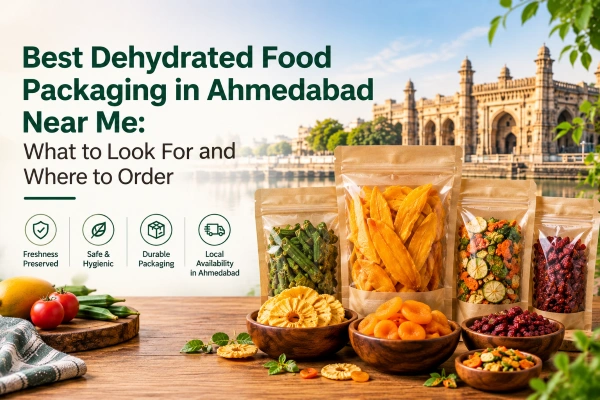
Type “best dehydrated food packaging Ahmedabad near me” into Google and you’ll notice something quickly—most results either talk about industrial packaging machinery or generic freeze-dried snack brands with no real connection to the city. If you’re actually looking for well-packaged, ready-to-eat dehydrated food made in Ahmedabad — the kind you can stock in a pantry, carry on a trek, or keep on hand for busy weeknights — the search gets a lot less specific than it should be.
This guide breaks down what actually makes dehydrated food packaging good, why it matters more than people realise, and where to find a genuinely local, Ahmedabad-based option that gets both the food and the packaging right.
What Makes Dehydrated Food Packaging “Good” in the First Place
Dehydrated and freeze-dried food lives or dies on its packaging. Unlike regular packaged snacks, dehydrated meals depend entirely on staying moisture-free to retain both their texture and their shelf life — a poorly sealed pack can turn a perfectly good dal khichdi into something clumpy or stale within weeks, regardless of how well the food itself was prepared.
Good dehydrated food packaging typically covers a few non-negotiables: airtight, multi-layer pouches that block moisture and light, proper vacuum sealing to remove excess air, portion sizing that matches how the food will actually be reconstituted, and clear instructions for rehydration since most of these products are meant to be prepared quickly with hot water. When any one of these is missing, the “shelf-stable” promise on the label doesn’t really hold up in practice.
Why This Matters More in a City Like Ahmedabad
Ahmedabad’s climate — long stretches of heat followed by humid monsoon months — makes packaging quality especially important for anything meant to sit in a pantry for weeks or months. Food that’s dehydrated but poorly packaged doesn’t just lose freshness faster here; it’s also more prone to picking up moisture during the monsoon, which defeats the entire purpose of choosing a dehydrated product in the first place.
This is also why searching specifically for a local Ahmedabad-based source matters, rather than ordering from a distant supplier whose packaging may not have been tested against local storage and transit conditions.
Ready-to-Eat Dehydrated Meals Worth Knowing About
Beyond just packaging, the actual value of good dehydrated food comes down to how close it gets to home-cooked taste once rehydrated. KQB Food’s ready-to-eat range covers a solid spread of everyday Indian meals designed for exactly this — quick preparation without sacrificing flavour.
For comfort-food basics, there’s the Dal Chawal and Dal Khichdi Ready to Eat, both built around the kind of simple, digestible meal most Indian households turn to on a tiring day. The Gujarati Dal Ready to Eat brings the specific sweet-tangy profile of Gujarati dal into a shelf-stable format, which is genuinely hard to find pre-made outside the region.
For richer options, the Dal Makhani Ready to Eat and its Jain counterpart, the Jain Dal Makhani Ready to Eat and Jain Dal Makhani, cater to different dietary preferences without dropping the dish’s signature creaminess. Similarly, the Jain Khichdi Kadhi and Jain Masala Khichdi Kadhi give Jain households a proper khichdi-kadhi combination without onion or garlic, which is often difficult to find in ready-to-eat form.
The range extends into North Indian favourites too, with Jain Paneer Butter Masala and a second variant, Jain Paneer Butter Masala, alongside Jain Paneer Lababdar, Jain Palak Paneer and its alternate version Jain Palak Paneer, and Jain Paneer Bhurji. Rounding out the street-food side, there’s Jain Pav Bhaji and a second Jain Pav Bhaji option — a genuinely useful find for Jain families who otherwise have to skip pav bhaji entirely when eating out.
Who Actually Needs Well-Packaged Dehydrated Food
It’s easy to assume dehydrated food is only for trekkers and travellers, but the real demand in a city like Ahmedabad is broader than that. Working professionals who want a proper meal ready in minutes, students living away from home, elderly parents who need quick, digestible food without daily cooking effort, and families stocking up before travel or unpredictable weeks all rely on this category more than people expect.
Jain households in particular benefit from a dedicated ready-to-eat range, since finding onion-and-garlic-free packaged meals — especially in richer preparations like paneer butter masala or pav bhaji — is far harder than finding standard versions.
What to Check Before You Buy Locally
If you’re specifically searching for “dehydrated food packaging near me” in Ahmedabad, a few quick checks help separate genuinely good options from ones riding on the freeze-dried trend without the packaging quality to back it up: look for vacuum-sealed or multi-layer pouches rather than simple plastic bags, check that the pack states a realistic shelf life rather than a vague “long-lasting” claim, and confirm rehydration instructions are clear and specific rather than generic.
KQB Food operates directly out of Ahmedabad and pairs its dehydrated and ready-to-eat range with dedicated vacuum packaging expertise, which is exactly the combination worth looking for when the search is about packaging quality as much as the food itself. The full lineup, including all the dal, khichdi, and paneer options above, is available on the Dehydrated Food (Freeze-Dried Food) category page.
“Best dehydrated food packaging near me” isn’t really a question about finding the fanciest pouch design — it’s about finding food that stays genuinely fresh in Ahmedabad’s climate, rehydrates properly, and actually tastes like something homemade rather than a compromise. Between a wide Jain-friendly ready-to-eat range and packaging built for local storage conditions, KQB Food covers both sides of that search. Explore the complete dehydrated food range and see which ready-to-eat meal earns a permanent spot in your pantry.
Frequently Asked Questions
1. What makes dehydrated food packaging different from regular food packaging?
Dehydrated food packaging relies on airtight, moisture-blocking, multi-layer pouches and vacuum sealing to preserve texture and shelf life, since even small amounts of moisture can spoil the product.
2. Why does climate matter for dehydrated food storage in Ahmedabad?
Ahmedabad’s heat and monsoon humidity can compromise poorly sealed packaging faster than in drier or more temperate regions, making proper vacuum and moisture-barrier packaging essential.
3. Are ready-to-eat dehydrated meals suitable for Jain diets?
Yes, several ready-to-eat options, including Jain dal makhani, Jain khichdi kadhi, and Jain paneer preparations, are made without onion and garlic to suit Jain dietary requirements.
4. How long do vacuum-packed dehydrated meals typically last?
Shelf life varies by product, but properly vacuum-sealed dehydrated meals generally last significantly longer than fresh food when stored in a cool, dry place — check the specific product packaging for exact duration.
5. Who typically buys ready-to-eat dehydrated food?
Working professionals, students, travellers, elderly individuals living alone, and families stocking up for busy or unpredictable weeks are among the most common buyers.
6. Where can I find well-packaged dehydrated and ready-to-eat food in Ahmedabad?
KQB Food, based in Ahmedabad, offers a full range of dehydrated and ready-to-eat meals paired with dedicated vacuum packaging, available on their dehydrated food category page.