

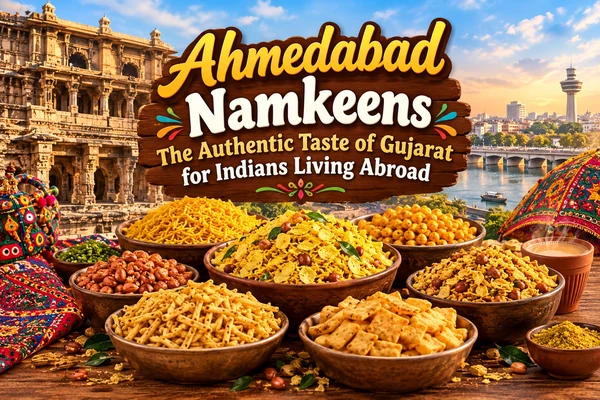
There’s a particular kind of homesickness that hits Gujaratis abroad, and it usually isn’t triggered by monuments or festivals — it’s triggered by the smell of freshly fried ganthiya, or the sound of a chevdo packet being opened at a family gathering. For the Indian diaspora, especially those who grew up in or have roots in Ahmedabad, namkeen isn’t just a snack category. It’s a direct line back to grandmother’s kitchen, Sunday breakfasts, and the pol lanes of the old city.
The good news is that authentic Ahmedabad namkeen no longer has to stay behind in India. Brands like KQB Food have made it possible for the Gujarati diaspora — across the US, UK, Canada, Australia, and the Gulf — to order the same traditional snacks their families back home have trusted for years, without compromising on recipe, texture, or spice authenticity.
This guide walks through the namkeens that define Ahmedabad’s food identity, and why they matter so much to Gujaratis living outside India.
Ganthiya: The Snack That Means “Home”
Ask any Gujarati abroad what they miss most from home, and ganthiya comes up almost immediately — not the mass-produced kind found in generic Indian grocery stores overseas, but the real, Bhavnagar-style version. The Bhavnagari Ganthiya is thicker and more textured than standard sev-based snacks, made from a besan dough recipe that’s been refined in Saurashtra for generations. For NRIs, ordering this specific variety — rather than settling for whatever “ganthiya” happens to be on a local shelf — makes a genuine difference in taste and nostalgia.
There’s also the Athanu Bhavnagari Ganthiya, which layers in pickle-style tang and spice. For anyone who grew up eating ganthiya alongside Gujarati athanu (pickle) at breakfast, this variety recreates that exact flavour combination in a single snack — something that’s genuinely hard to find outside India.
Sev Varieties: Everyday Snacking, Reimagined for Life Abroad
Sev is the snack most diaspora households reach for when they want something familiar but light — a quick tea-time bite, or a topping for improvised chaat when the “real” ingredients aren’t available locally. The Aloo Sev remains the most versatile, mild enough for kids born and raised abroad who are just being introduced to Gujarati flavours, while still tasting authentic to parents who grew up on it.
For those who want a bit more intensity — often the ones who’ve been away from India longest and crave stronger, spicier flavours as a reminder of home — the Aloo Mari Sev delivers a peppery kick that cuts through the richness of the besan and potato base. And for a modern twist that’s found favour even among second-generation Gujaratis who’ve grown up with more varied palates, the Aloo Palakh Sev blends spinach into the classic recipe, offering a snack that feels both nostalgic and current.
Chevdo: Gujarat’s Trail Mix, Ready for International Pantries
Chevdo travels exceptionally well, both literally and in terms of taste — it’s shelf-stable, doesn’t need refrigeration, and holds its crunch far longer than most other Indian snacks, which is exactly why it’s a favourite for international shipping. The Baroda No Lilo Chevdo, with its fresh green chilli and curry leaf flavour, is a standout for diaspora families who want something that tastes distinctly homemade rather than mass-manufactured. It works equally well as an everyday snack, a party mixer for gatherings with other Indian families abroad, or even a conversation-starting gift for non-Indian friends curious about Gujarati food.
Bhakhri: The Practical, Travel-Friendly Snack
For anyone who has ever tried to pack Indian food for a long-haul flight or a work lunch abroad, bhakhri is close to ideal — dry, crisp, and durable, without the mess or smell that other Indian snacks can carry. KQB Food’s bhakhri lineup includes the plain, everyday Bhakhri Sadi, the warmly spiced Bhakhri Jeera, the punchier Bhakhri Mari, and the fragrant Bhakhri Methi.
For international orders specifically, the vacuum-packed versions — Sadi, Jeera, Mari, and Methi bhakhri — are especially practical, since vacuum sealing helps preserve freshness and crunch over the longer transit times that come with shipping abroad.
Lighter and Lesser-Known Options Worth Trying
Not every classic Gujarati namkeen is deep-fried besan. The Bhadran Moong offers a lighter, protein-forward alternative that appeals to diaspora families balancing nostalgia with more health-conscious eating habits abroad. Meanwhile, the Bardoli Na Dry Patra turns the traditionally fresh, steamed colocasia-leaf patra into a dry, travel-friendly namkeen — a clever format for anyone who loved patra back home but can’t easily recreate it in a kitchen abroad.
Why Authenticity Matters More When You’re Far From Home
When you’re outside India, the margin for “close enough” narrows considerably. A namkeen that’s slightly off in spice balance, texture, or recipe doesn’t just taste different — it breaks the specific memory it’s supposed to trigger. This is where sourcing from a maker that sticks to traditional Gujarati recipes, like KQB Food, makes a real difference for the diaspora community. Every product in their namkeen range is made to the same standard that’s earned trust across Gujarat for years, not adapted or simplified for an international market.
For festivals, family gatherings, gifting fellow Gujaratis abroad, or simply restocking a pantry that’s run dry of anything familiar, having reliable access to these specific, correctly-made snacks is worth far more than convenience alone.
Conclusion
Namkeen from Ahmedabad carries a weight that’s hard to explain to anyone who didn’t grow up with it — it’s breakfast, festival food, travel snack, and comfort food all at once. For Gujaratis living abroad, being able to order the real Bhavnagari Ganthiya, authentic Baroda chevdo, or proper Bhadran moong isn’t a small convenience; it’s a way of staying connected to home. Explore the full collection at KQB Food and bring an authentic taste of Ahmedabad to wherever you’re living now.
Frequently Asked Questions
1. Can authentic Ahmedabad namkeen be shipped internationally?
Yes, brands like KQB Food cater to international orders, offering shelf-stable and vacuum-packed formats designed to stay fresh over longer shipping times.
2. Which Ahmedabad namkeen has the longest shelf life for international shipping?
Vacuum-packed bhakhri varieties and chevdo tend to travel best, as they’re naturally low-moisture and hold their crunch well over extended transit periods.
3. Why does homemade-style Gujarati namkeen taste different from what’s available abroad?
Many namkeens sold internationally are mass-produced with simplified recipes; brands that follow traditional Gujarati methods, like Bhavnagari-style ganthiya making, retain a noticeably more authentic texture and flavour.
4. Are there healthier Gujarati namkeen options for the diaspora?
Yes — options like Bhadran moong offer a lighter, protein-rich alternative to deep-fried besan snacks, suiting more health-conscious eating habits abroad.
5. What’s a good Gujarati namkeen to introduce to non-Indian friends?
Chevdo, particularly the milder, herby Baroda-style green chevdo, tends to be an approachable entry point since it’s less spicy and has a familiar trail-mix-like texture.
6. Where can NRIs order genuine Ahmedabad-style namkeen online?
The complete range of authentic Gujarati namkeens, including ganthiya, sev, chevdo, and bhakhri, is available through KQB Food’s official namkeen category.