


Two Roasting Philosophies, One Snack
To an outside observer, khakhra can look like a single product with different flavour labels. To anyone who grew up eating it, jeera-sada wheat khakhra and pure ghee khakhra are almost different snacks — not because the base dough differs dramatically, but because the roasting medium changes the fat profile, aroma, and how long the khakhra stays crisp after opening. For international buyers ordering online without the ability to sample in person, understanding this distinction is the single most useful piece of information before checkout.
What “Sada” and “Jeera” Actually Mean
Sada khakhra is the plain, unseasoned wheat base — roasted thin, minimally spiced, and closest to what most Gujarati households would call the “default” khakhra used as a base for toppings or eaten with pickle and chutney. Jeera khakhra adds roasted cumin (jeera) directly into the dough, giving it a warmer, slightly earthy flavour that holds up well even after weeks in transit. Jeera-mari khakhra goes a step further, adding crushed black pepper (mari) alongside cumin for a sharper, more savoury profile. Jiralu khakhra refers to the same cumin-forward family, sometimes with a slightly coarser cumin texture for extra bite.
The Role of Ghee: More Than a Flavour Choice
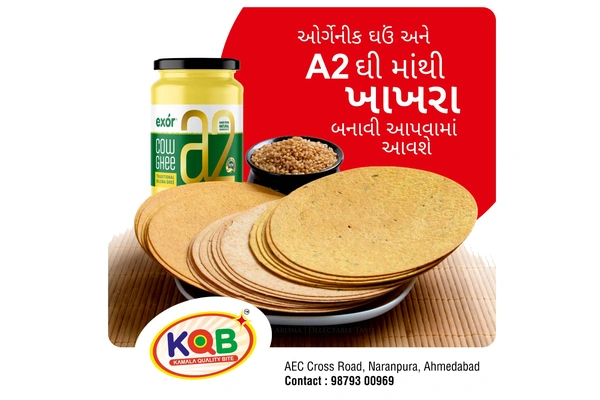
Pure ghee khakhra is roasted using clarified butter instead of, or in addition to, a lighter cooking oil. This has three measurable effects. First, ghee has a higher smoke point than most vegetable oils, which allows for a more even, deeper roast without the acrid taste that can develop when oil is pushed too close to its smoke point. Second, ghee’s short-chain and medium-chain fatty acid composition gives the khakhra a rounder, more rounded mouthfeel compared to the flatter taste of oil-roasted khakhra. Third, ghee is inherently shelf-stable at room temperature when properly clarified, which is why pure ghee khakhra travels well internationally without requiring refrigeration.
The trade-off is calorie density: ghee-roasted khakhra is richer and more indulgent than plain wheat khakhra, which is why it is traditionally reserved for festivals, guests, and special occasions rather than daily consumption in most Gujarati households.
Why This Matters More When You Are Ordering From Abroad
When khakhra is purchased locally in Gujarat, buyers can often smell or sample before committing. International buyers ordering wheat khakhra online do not have that option, so matching the variant to actual intent becomes important: someone looking for an everyday, lighter tea-time snack is generally better served by Regular (Sada / Jeera) Khakhra, while someone recreating a festive or nostalgic home experience — or simply wanting the richest possible flavour — should choose Pure Ghee Khakhra.
If you enjoy the ghee-roasted profile, it is also worth exploring our Pure Ghee Bhakhri, which applies the same roasting philosophy to a thicker, softer flatbread snack — a useful pairing for anyone building a broader Gujarati snack box for shipping abroad.
A Practical Ordering Framework
• Choose Sada or Jeera Wheat Khakhra for daily, lighter snacking or if you plan to top it with chutney, sev, or yoghurt at home.
• Choose Jeera-Mari if you prefer a more pronounced, spicier flavour without moving to a fully masala variant.
• Choose Pure Ghee Khakhra for gifting, festivals, or when flavour richness matters more than calorie count.
• If unsure, order a mixed pack from our Variety Khakhra range to compare before committing to a bulk international order.
Frequently Asked Questions
1. What is the actual difference between sada and jeera khakhra?
Sada khakhra is the plain, minimally seasoned wheat base, while jeera khakhra has roasted cumin incorporated into the dough for a warmer, earthier flavour.
2. Does pure ghee khakhra need refrigeration during international shipping?
No. Properly clarified ghee is shelf-stable at room temperature, which is part of why ghee-roasted khakhra travels well without refrigeration.
3. Is pure ghee khakhra healthier or less healthy than regular khakhra?
It is generally richer and more calorie-dense due to the ghee content, while regular sada or jeera khakhra roasted in lighter oil is the more calorie-conscious everyday option.
4. What does “jiralu” khakhra mean?
Jiralu refers to the cumin-forward family of khakhra, similar to jeera khakhra, often with a slightly more pronounced cumin presence.
Compare and Order Wheat Khakhra Online
Explore Regular Khakhra and Pure Ghee Khakhra at kqbfood.com, or view the complete Buy Khakhra Online range. Locate our Ahmedabad production base: KQB Food on Google Maps.